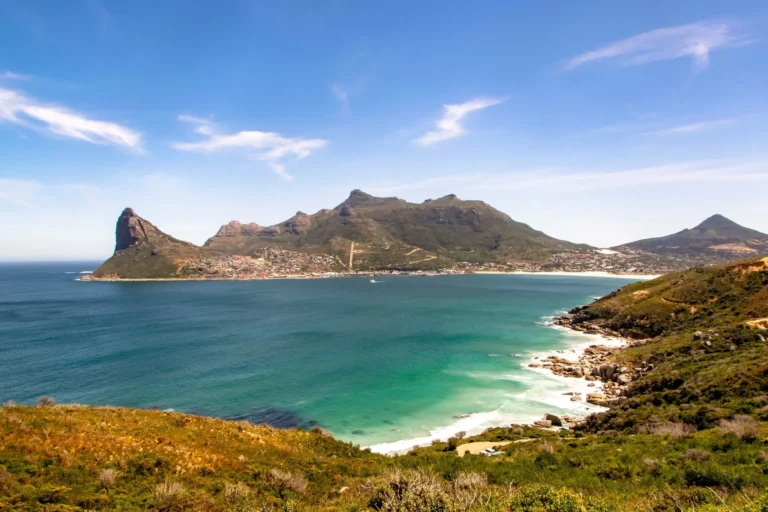
The perfect 2 week South Africa itinerary is all about adventure, and that’s exactly what we set out to capture here! This beautiful country tops bucket lists around the world for good reason, and it absolutely stole our hearts during our 6-week visit.
Where else can you see majestic animals like elephants and lions up close in the wild, indulge in a fantastic food scene that rivals the best in the world, admire stunning coastline, sip delicious local wines, road trip to your heart’s content, camp on a budget one night and then spend thousands on a luxurious lodge the next… all in one place?
South Africa is a phenomenal travel destination, and it quickly rocketed its way up the list to be one of our very favorites.
And, after wrapping up this 2 week South Africa itinerary, we bet you’ll feel the same way!
We spent about a month and a half in South Africa in total, and have whittled our experiences down into a more manageable travel route for this itinerary.
Here’s how to plan a 14 day trip to South Africa that will have you scheming to come back as soon as you leave!
Table of Contents
How We Structured This 2 Week South Africa Itinerary
South Africa is a large country, and depending on whether you are flying in and out of Johannesburg, Cape Town, or a mix of both, you’ll likely want to order this 2 week South Africa itinerary in a different way.
For travelers flying into Johannesburg, we recommend starting with Kruger National Park, before flying from either Nelspruit (near Kruger National Park) or Johannesburg (a 6-ish hour drive from Kruger National Park) to Cape Town.
If your schedule allows it, consider pausing for one day before heading to Kruger National Park in order to check out some of the best things to do in Johannesburg.
If you’re flying into Cape Town, we’d recommend starting in the Western Cape and then booking a round-trip flight to Nelspruit to experience Kruger National Park.
On the other hand, if you’re, say, flying into Cape Town and out of Johannesburg, you may want to drive all the way to Port Elizabeth along the Garden Route after experiencing the Western Cape and then fly to Nelspruit from there.
For those reasons, consider each of the stops on our recommended 2 week South Africa itinerary to be mix-and-match destinations that can be re-ordered depending on the logic of flight patterns.
We wrote the itinerary from the perspective of someone flies in Cape Town. From there, we traced a logical pattern through the Western Cape and the Garden Route, and then added Kruger National Park and Johannesburg to the end of the itinerary to be placed where they make the most sense for your South Africa trip.
Since a portion of this itinerary for South Africa is a road trip, you’ll also need a rental car for part of your journey (though if you’d prefer not to drive, there are some workarounds, which we’ll get into below).
Our Recommended 14 Day South Africa Travel Route
Stop #1: 4 Days in Cape Town
Cape Town quickly became one of our favorite cities in the world.
Known for its easy access to incredible nature, its beautiful coastline, and its incredible food scene, Cape Town is an invigorating city that is easy to fall in love with.
Here’s our recommended Cape Town itinerary, which goes into all of the below suggestions in much more detail!
Top Things to Do in Cape Town
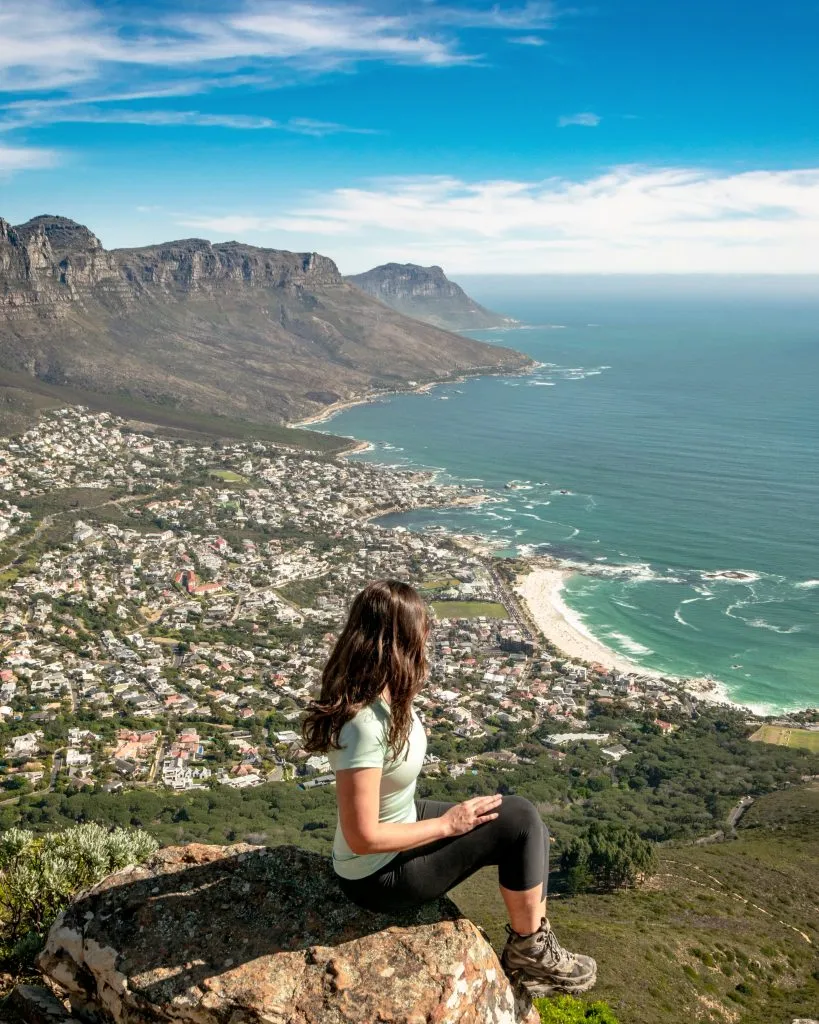
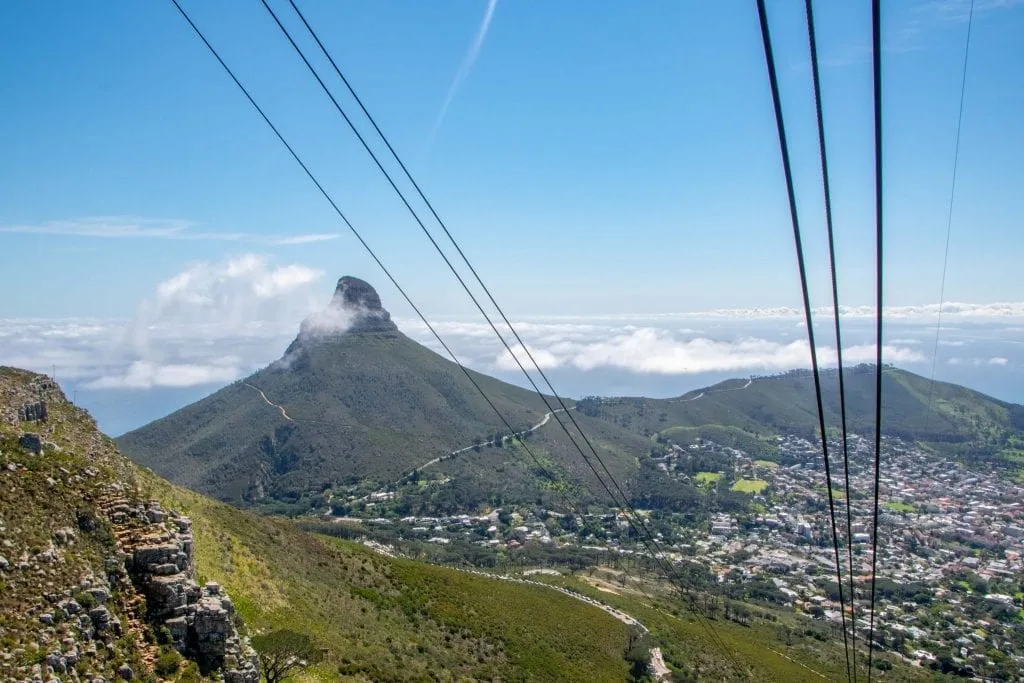
Hike Lion’s Head.
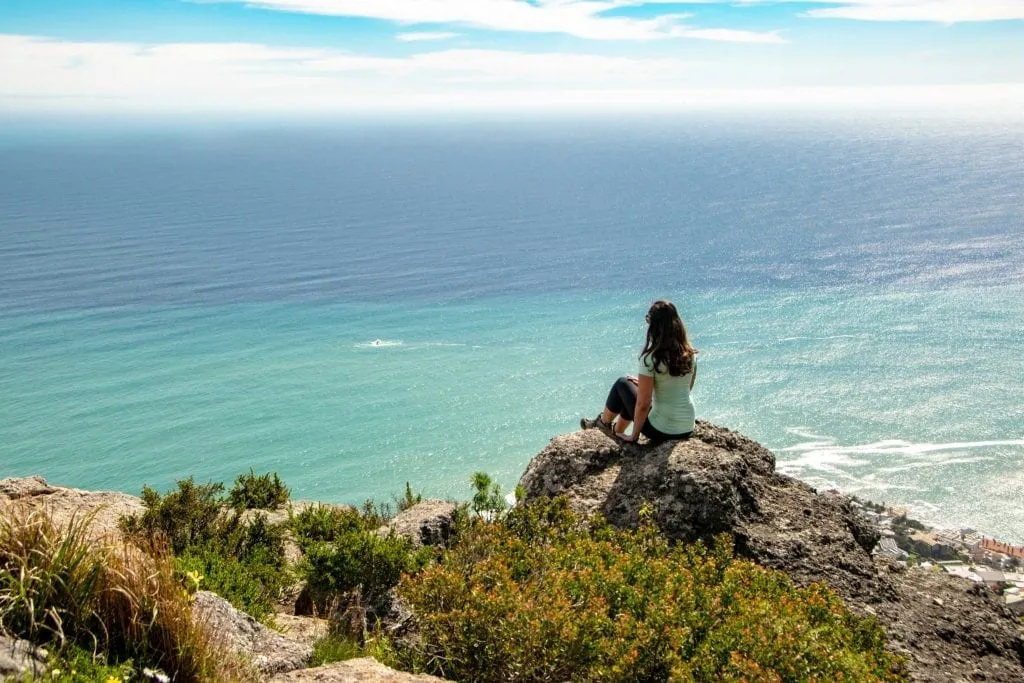
This short afternoon hike is the perfect way to experience Cape Town’s outdoor culture and to get fantastic views of both Table Mountain and the city of Cape Town.
If you have your heart set on a sunrise or sunset hike, consider signing up for a guided hike like this for safety (and bring a headlamp!).
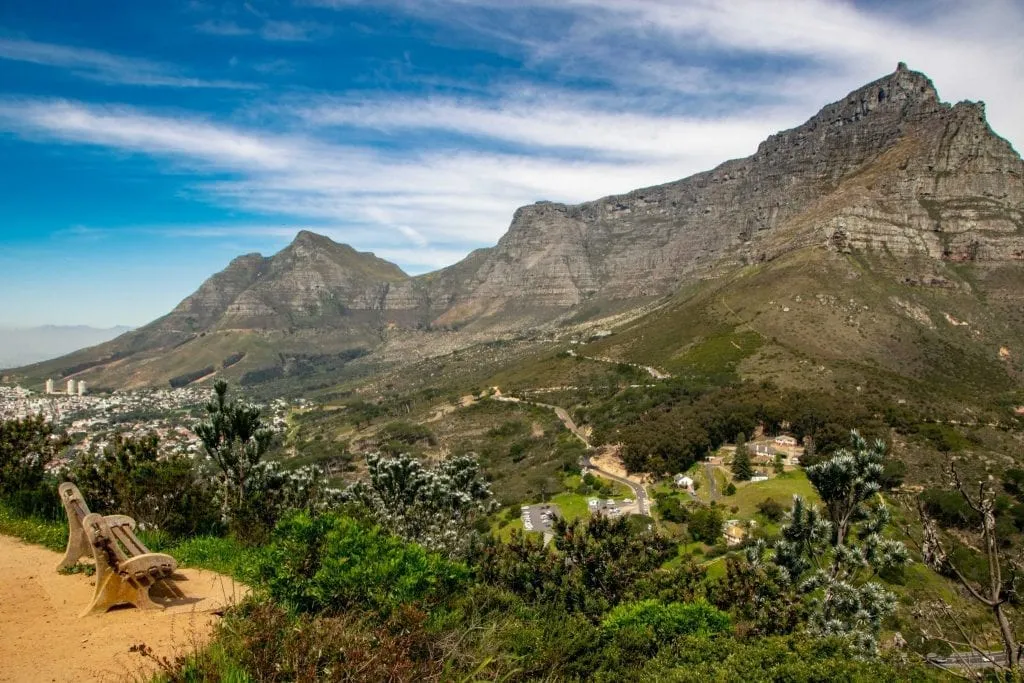
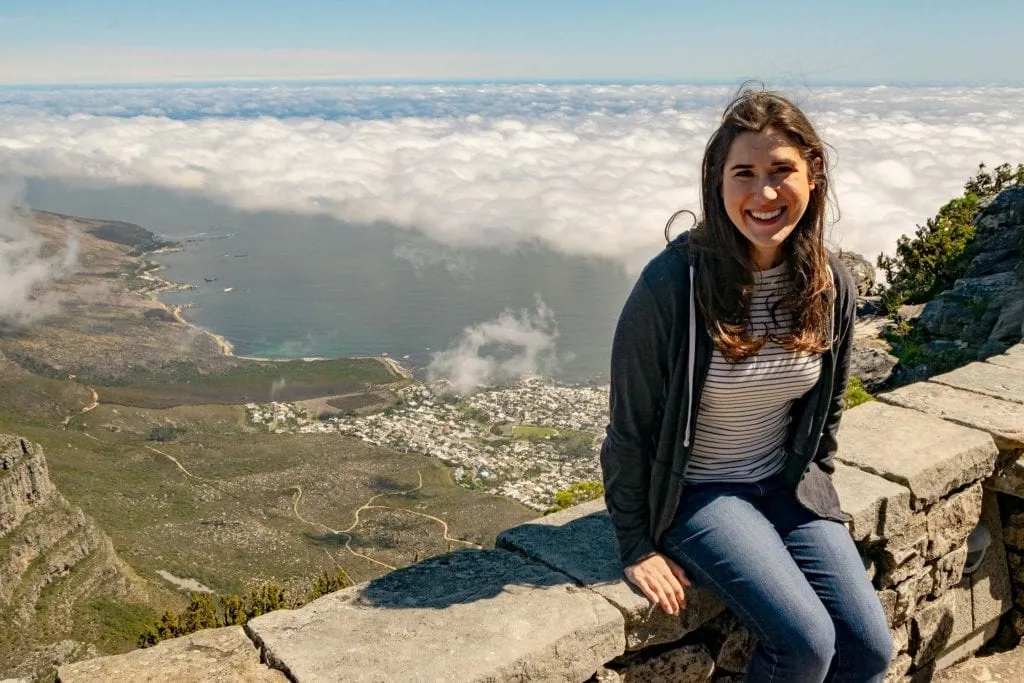
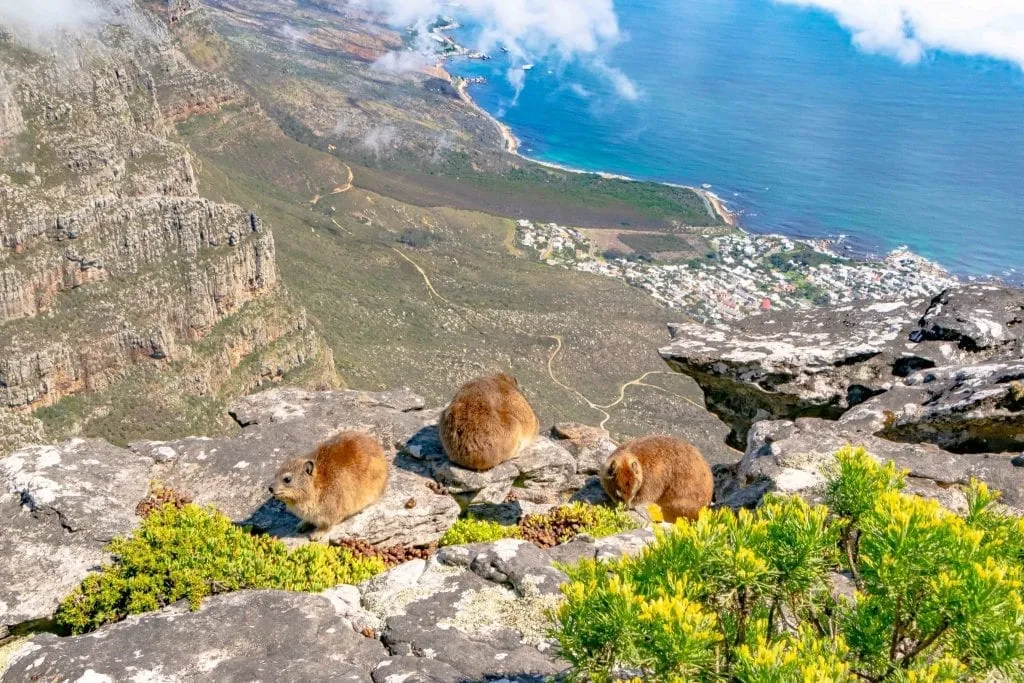
Ride the cable car up Table Mountain.
Recently named one of the Seven New Wonders of the World, Table Mountain dominates Cape Town’s skyline and is an unmissable feature of the city.
Bear in mind that Table Mountain does have a tendency to be covered in clouds, so if you wake up one morning of your stay and see it clear and visible, head to the top immediately!
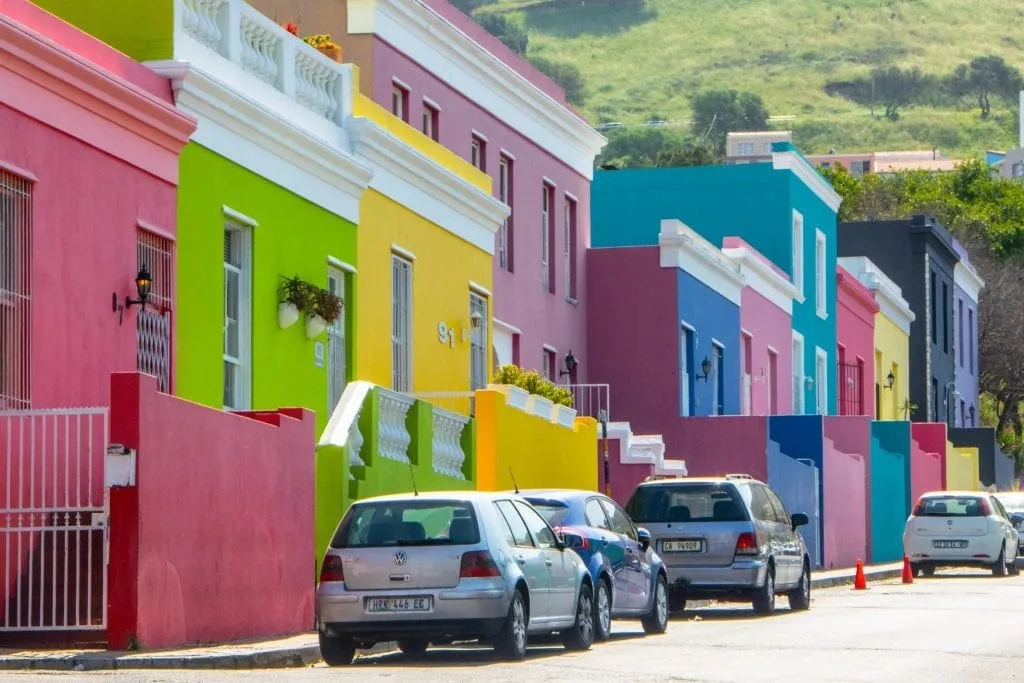
Visit Bo-Kaap.
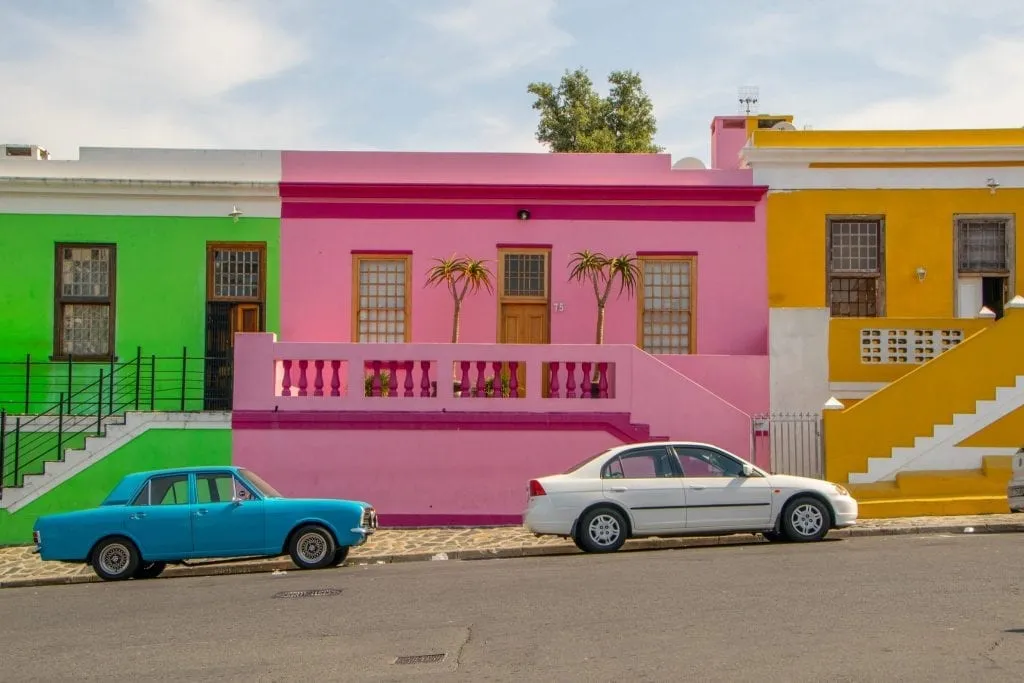
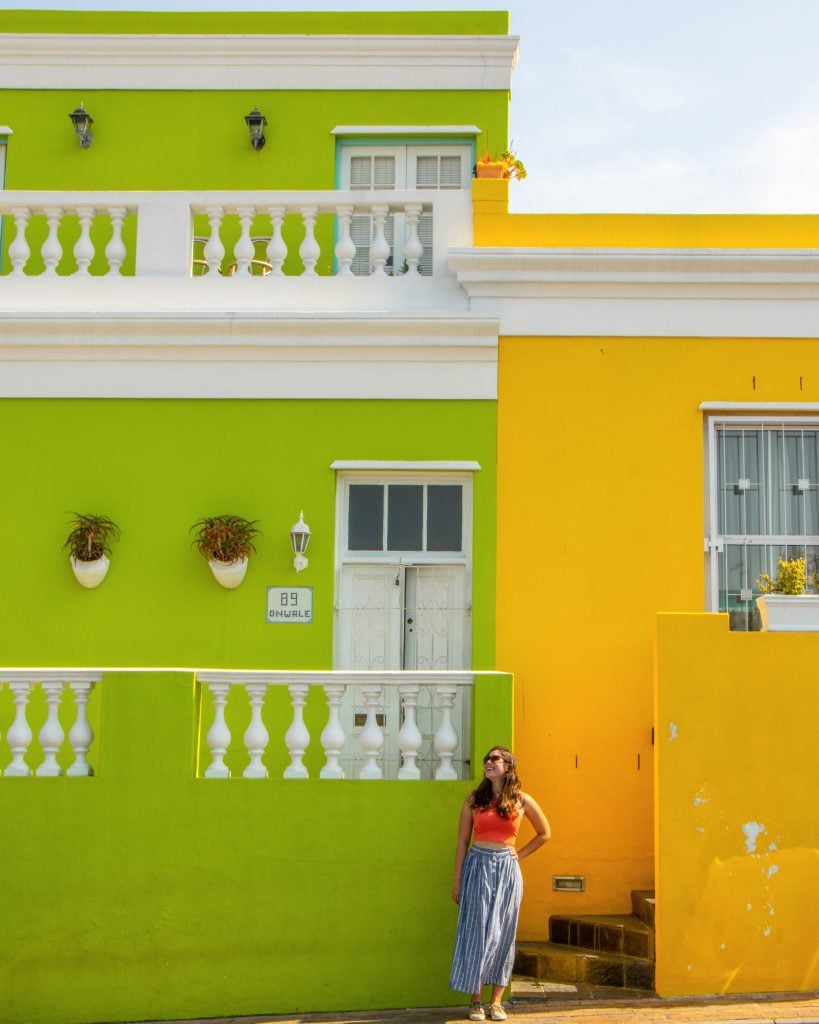
Cape Town’s colorful Cape Malay neighborhood of Bo-Kaap is a bit social-media-famous these days, but that’s no reason to stay away: it’s both beautiful and very important to the city’s history.
Signing up for a guided walking tour like this or a delicious Cape Malay cooking class are popular ways to dive deeper into Cape Town’s most photographed neighborhood.
Eat all the food.
Cape Town is bursting with incredible restaurants, from burger joints (Jerry’s Burger Bar) to brunch spots (Clarke’s Bar and Dining Room), to the often-voted best coffee in the world, served with a heaping side of elaborate steampunk decor (Truth Coffee).
Be sure to build plenty of time into your South Africa itinerary to enjoy Cape Town’s food scene!

Things to Consider in Cape Town
Uber is a popular way to get around.
Other options include navigating the somewhat limited public transportation system and renting a car.
We considered Uber to be by far the simplest option for navigating Cape Town itself, and it is quite affordable within the city!
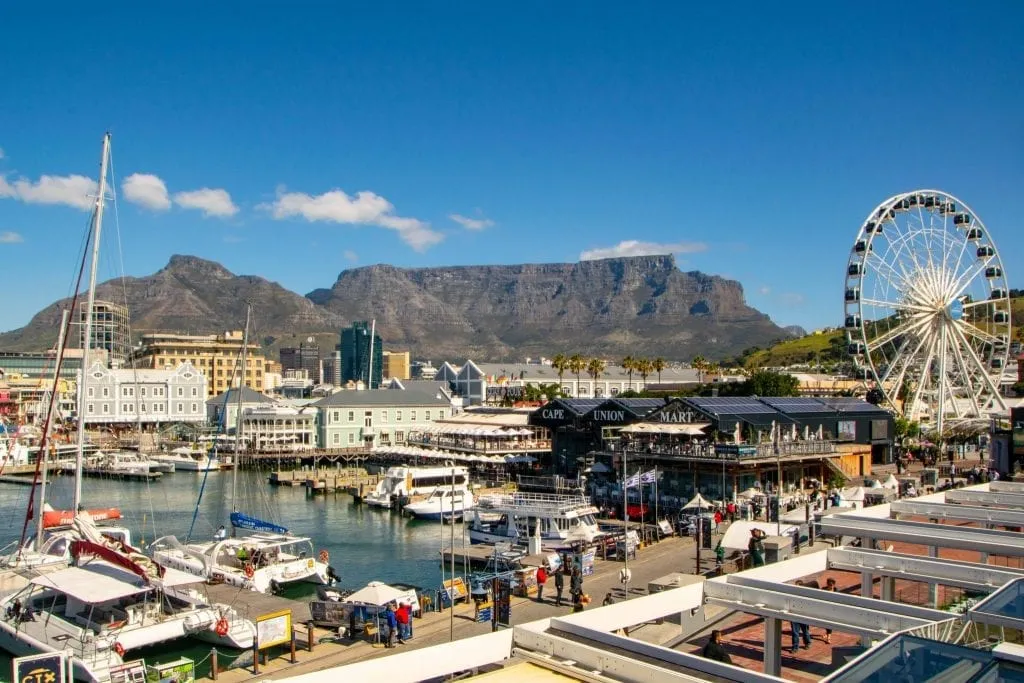
…And on that note, Cape Town isn’t incredibly walkable.
Sure, you can walk around downtown safely enough, especially during the day–but practically speaking, Cape Town is a very sprawling city. Think Los Angeles, not Lisbon.
Major attractions like Table Mountain require a dedicated chunk of time and a car or bus ride to reach, and some popular spots (like Muizenberg Beach and its colorful beach houses, or Chapman’s Peak Drive) are half an hour or more away from the city center.
Keep this in mind when deciding how much sightseeing you can fit into one day, and also when deciding where to stay while in Cape Town!
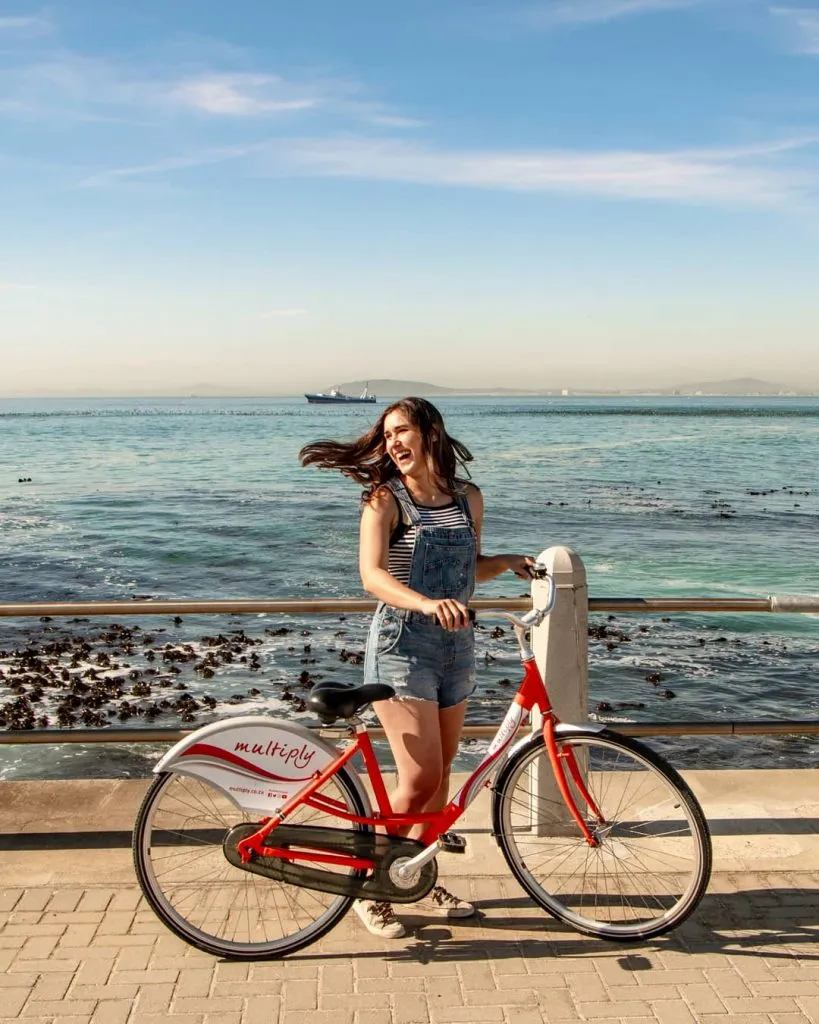
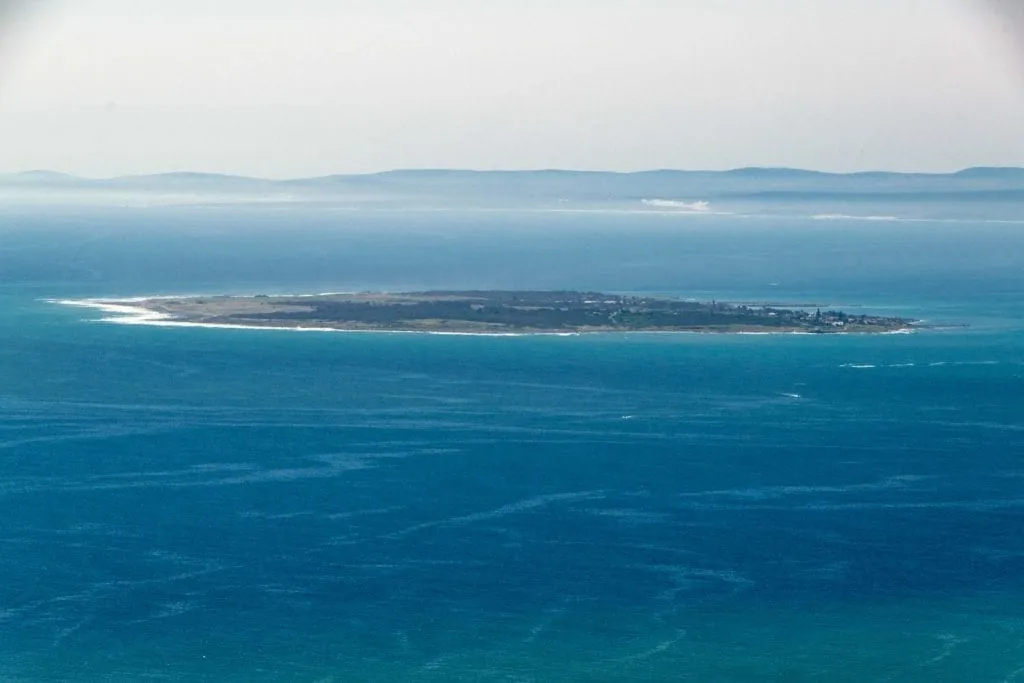
If you want to visit Robben Island, you’ll need to book ahead.
You can book your tour here, and they often sell out several days in advance.
Keep in mind that the ferries are weather-dependent, too!
Where to Stay in Cape Town
Budget
Urban Hive Backpackers — Featuring great reviews and a prime location right along Long Street, you’ll be right in the center of the action staying at Urban Hive Backpackers!
There are plenty of restaurants, bars, tour companies, and even a souvenir market within a short walk from the doorstep.
Check rates & book your stay at Urban Hive Backpackers!

Mid-range
Number 5 Guesthouse — Located on a quiet road but just minutes away from the action on Kloof Street, Number 5 Guesthouse boasts excellent reviews, a delicious included breakfast, and an attentive staff at midrange prices.
Check rates & book your stay at Number 5 Guesthouse!
Luxury
Cloud 9 Boutique Hotel & Spa — If you would like to be pampered during your 3 days in Cape Town, look no further than Cloud 9.
Here you’ll find an excellent location within short walking distance of plenty of restaurants and boutiques, on-site spa services, a rooftop pool, and an incredible view of Table Mountain!
Check rates & book your stay at Cloud 9 Boutique Hotel & Spa!
Stop #2: Cape Winelands + Cape Peninsula for 2 Days
Wine and penguins: what could be more fun than that combination?
After leaving Cape Town, we recommend renting a car and heading to the Cape Winelands and Cape Peninsula for the second stop of your 2 weeks in South Africa itinerary.
Choose a vineyard for a night or two of relaxation and tastings, and enjoy a completely different side of South Africa from Cape Town.
Prices range from extremely reasonable to ridiculously high, depending on the level of luxury you’re seeking (we loved staying at this winery and found their prices extremely reasonable).
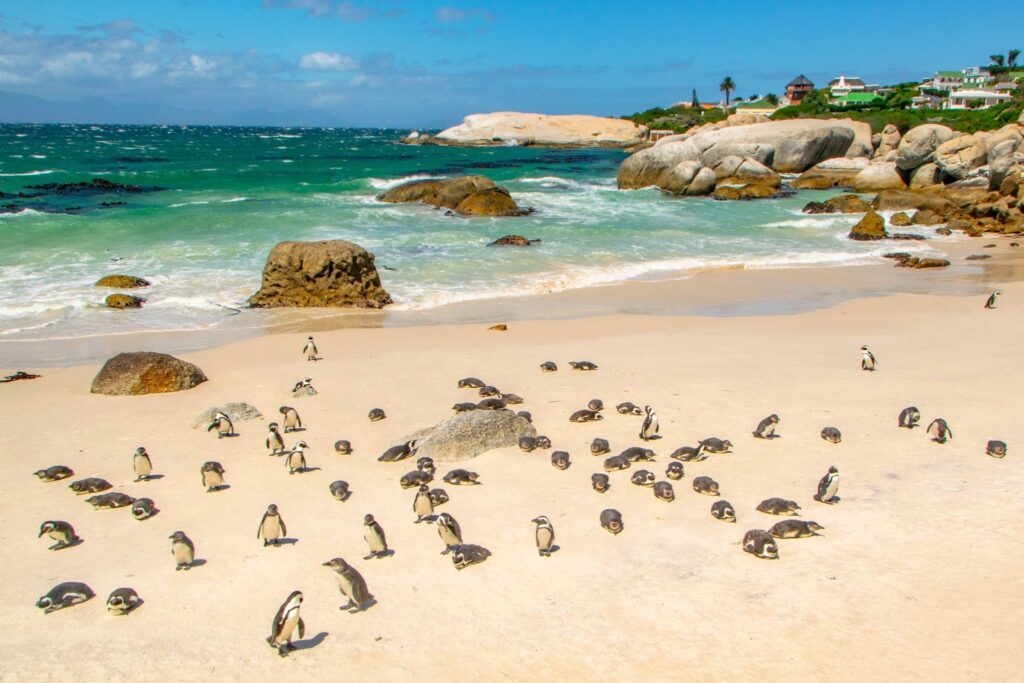
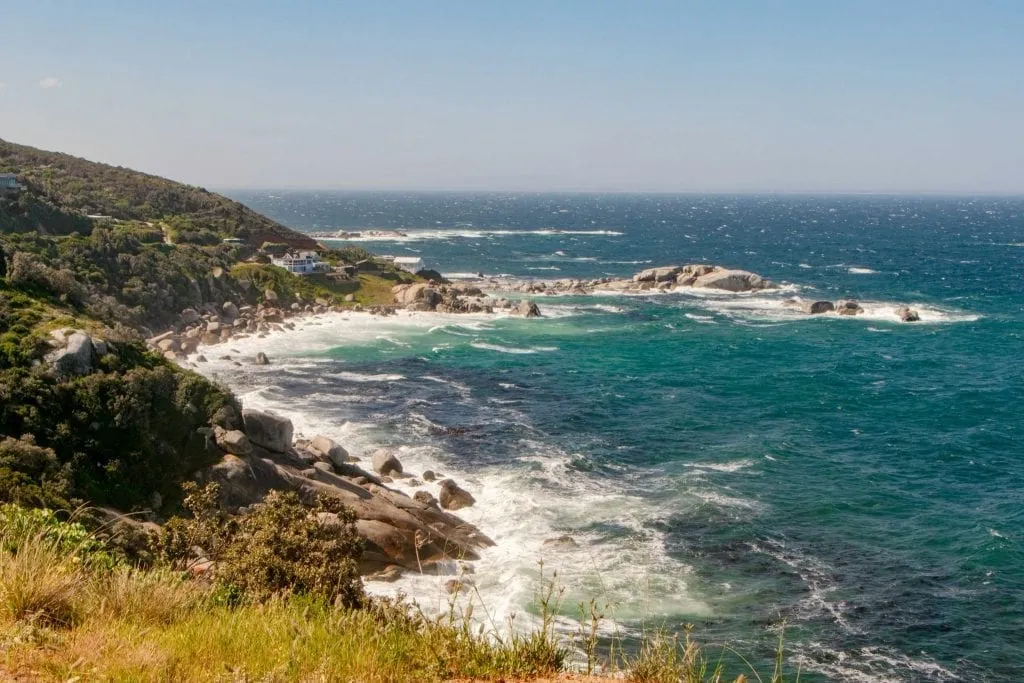
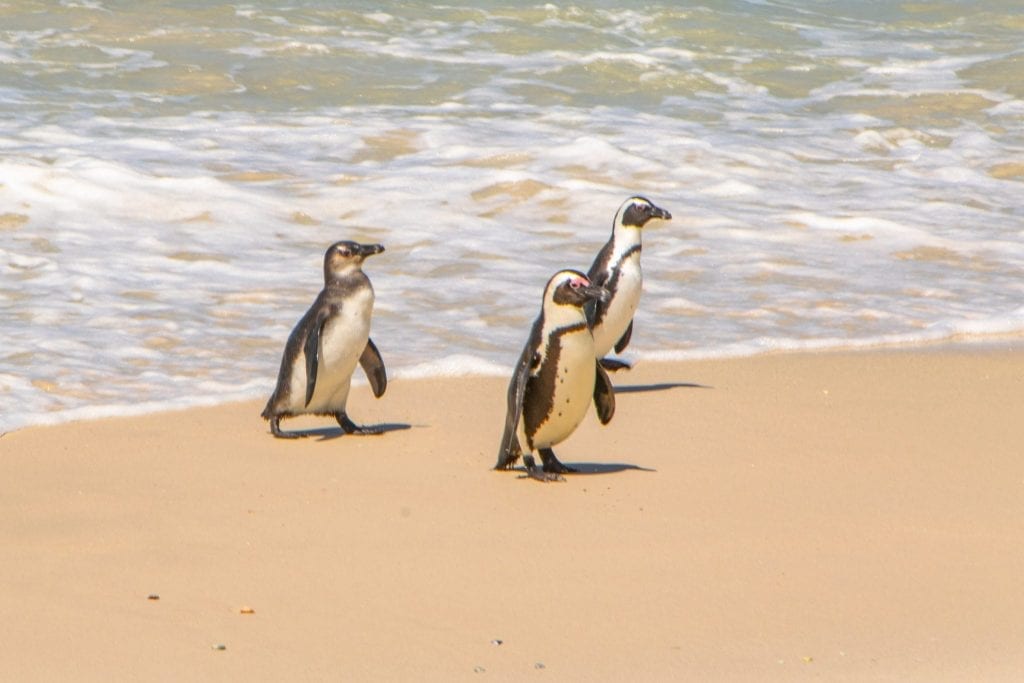
After enjoying a night or two in wine country, take a short drive to the Cape Peninsula to say hello to the wild penguins who live on Boulders Beach and to see the famous Cape Point!

Top Things to Do in the Cape Winelands & Cape Peninsula
Attend a wine tasting (or several).
The Cape Winelands are covered in wineries, from large operations with elaborate tasting rooms to small, family-run businesses.
Be sure to sample several varieties, and aim for different pairings, too!
Locally made cheese, biltong, and even chocolate are served, depending on the winery in question.

Visit Boulders Beach.
Nearly everyone who is planning a 2 week South Africa itinerary is looking forward to admiring the African penguins: they’re one of the best-known features of the area!
Though Boulders Beach and its penguin colony are popularly advertised as something to do in Cape Town, the truth is, they’re located about 45 minutes outside the city.
With 2 weeks in South Africa, it makes sense to dedicate some time to visiting them individually, rather than squeezing it into a day trip.
There is a small fee to enter the beach, and while there is a swimming area (and occasionally penguins head over for a visit), people are not allowed to get on the beach or swim in the area where the bulk of the penguins congregate.
We absolutely loved visiting Boulders Beach, and definitely agree with many others that it’s one of the best places to visit in South Africa!
Drive along the Cape Peninsula to Cape Point.
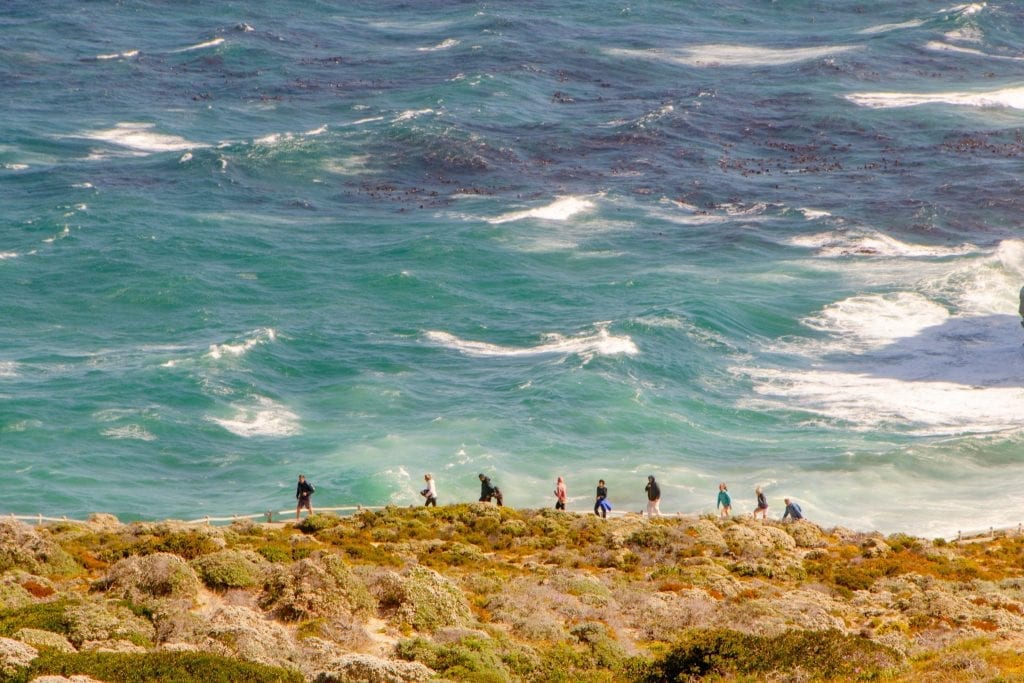
Cape Point was long considered to be the southern tip of Africa, and even though we’ve since learned that honor actually belongs to Cape Agulhas, this beautiful national park is still worth a quick visit.
You can hike to the famous Cape of Good Hope from Cape Point, too, or visit the beach separately.
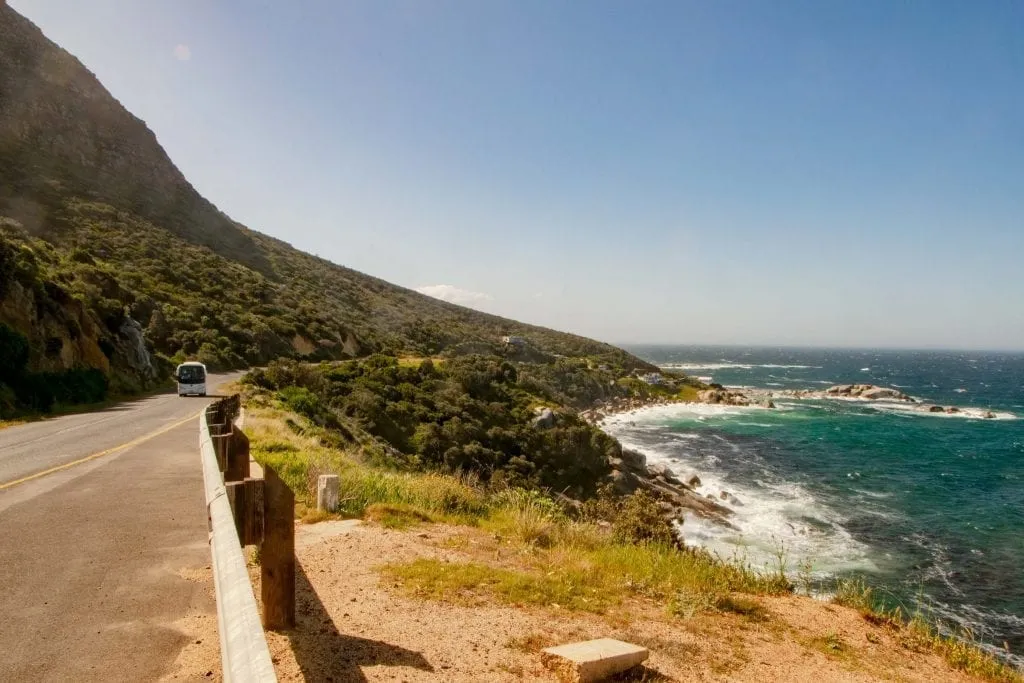
The drive from Boulders Beach to Cape Point is one of the prettiest we have ever taken, and the views from Cape Point aren’t bad, either!

Things to Consider in the Cape Winelands & Cape Peninsula
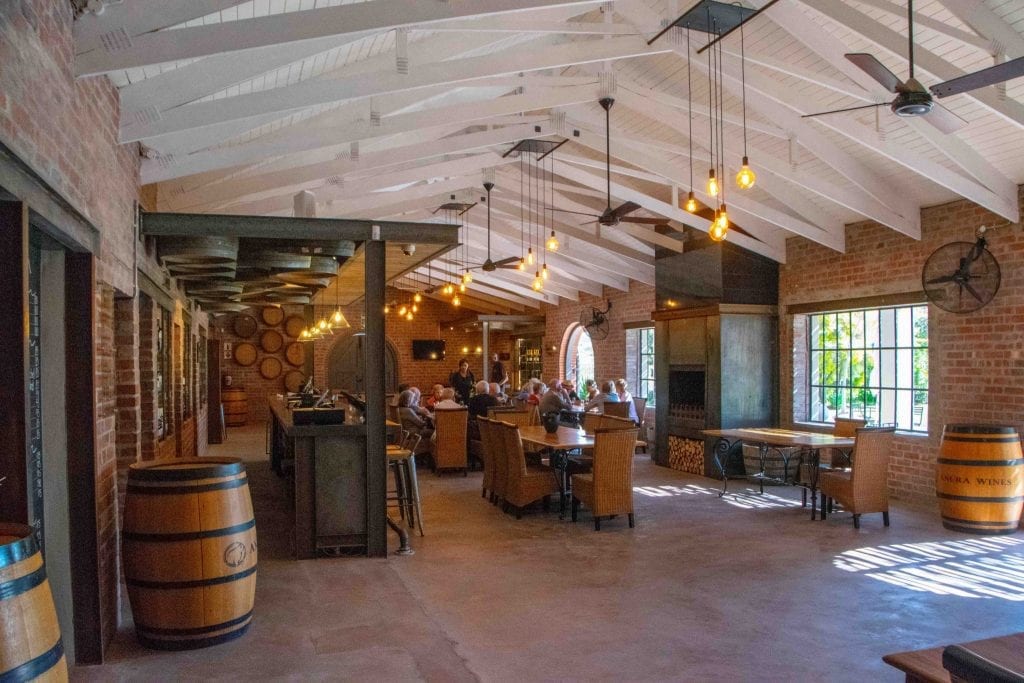
Depending on how you structure your wine tastings, you may need to arrange safe transportation.
This could come in the form of a tour, a shuttle, an Uber, or a taxi, but if everyone in your traveling group plans to partake in the wine, you’ll definitely need a driver.
We didn’t leave any of our tastings in a safe state to drive!
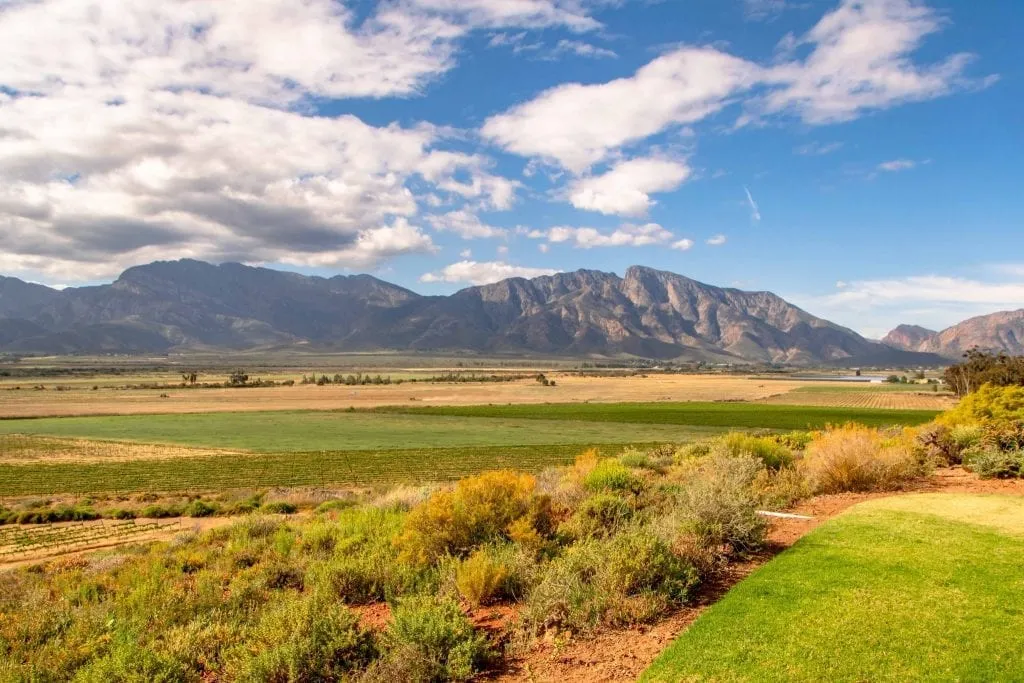
If you aren’t a wine drinker, consider heading straight to the Cape Peninsula.
The Cape Winelands are beautiful, but the wine is definitely their biggest selling point.
With only 2 weeks in South Africa, consider using your time elsewhere if you avoid alcohol.
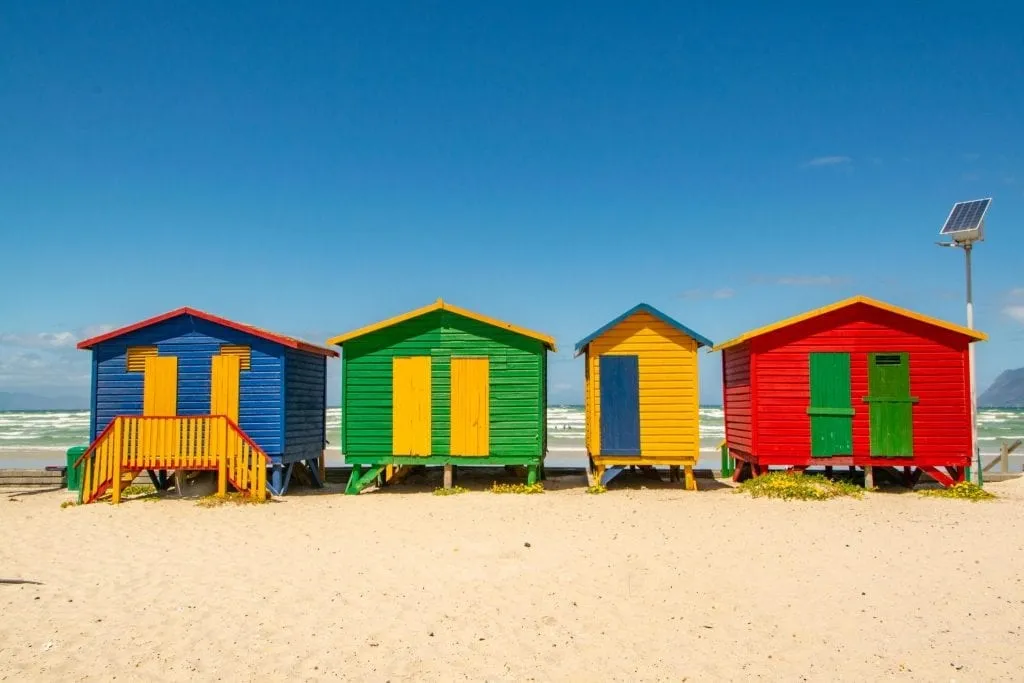
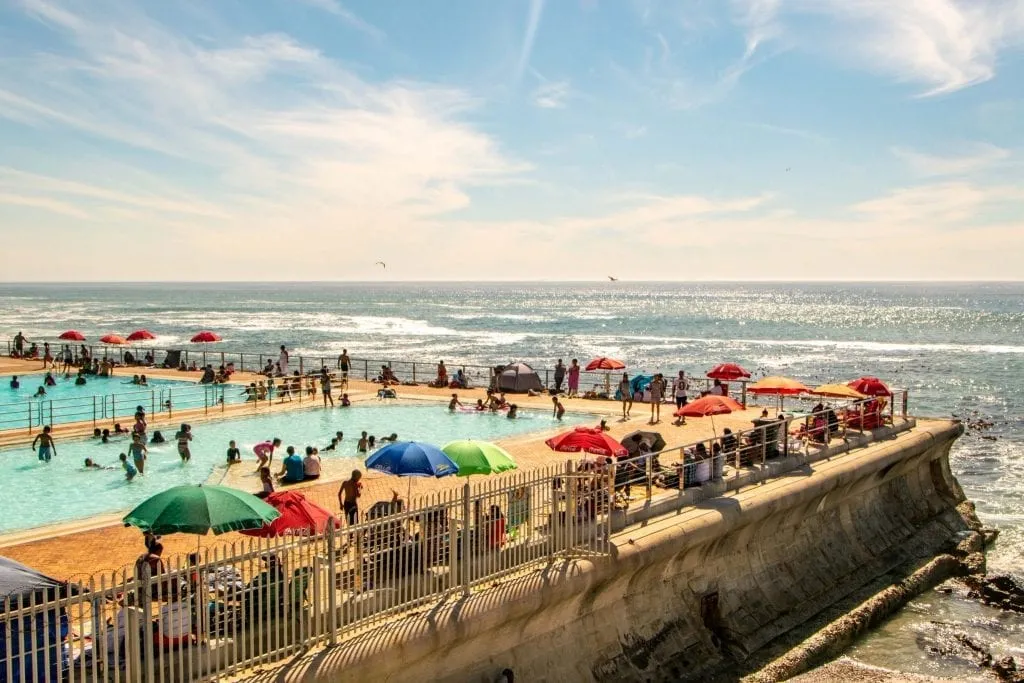
On your way out of Cape Town, consider stopping at Muizenberg Beach if you haven’t already.
This is the famous surfing beach that is home to colorful beach huts lined up along the sand.
If you aren’t a surfer, you probably won’t make it over to Muizenberg Beach during your time in Cape Town, simply because of the distance–it’s about a 30-minute drive from the V&A Waterfront.
If you’d like to see it, be sure to stop by and check out the beach while you have a car available and are headed in that general direction!
Where to Stay in the Cape Winelands
The Cape Winelands are far too expansive of an area to give a definitive recommendation on exactly where to stay, but the good news is, there’s really not a wrong answer as long as you opt for a well-reviewed property!
Whether you want to stay close to Cape Town, hit up the popular Stellenbosch, or find a country property far from any town, you’ll have a plethora of options.
We can certainly recommend the property we stayed at as an affordable option that makes semi-geographic sense between Cape Town and the Garden Route: Leipzig Country House & Winery.
We loved staying here, and the property is so beautiful that the prices seem almost too good to be true!
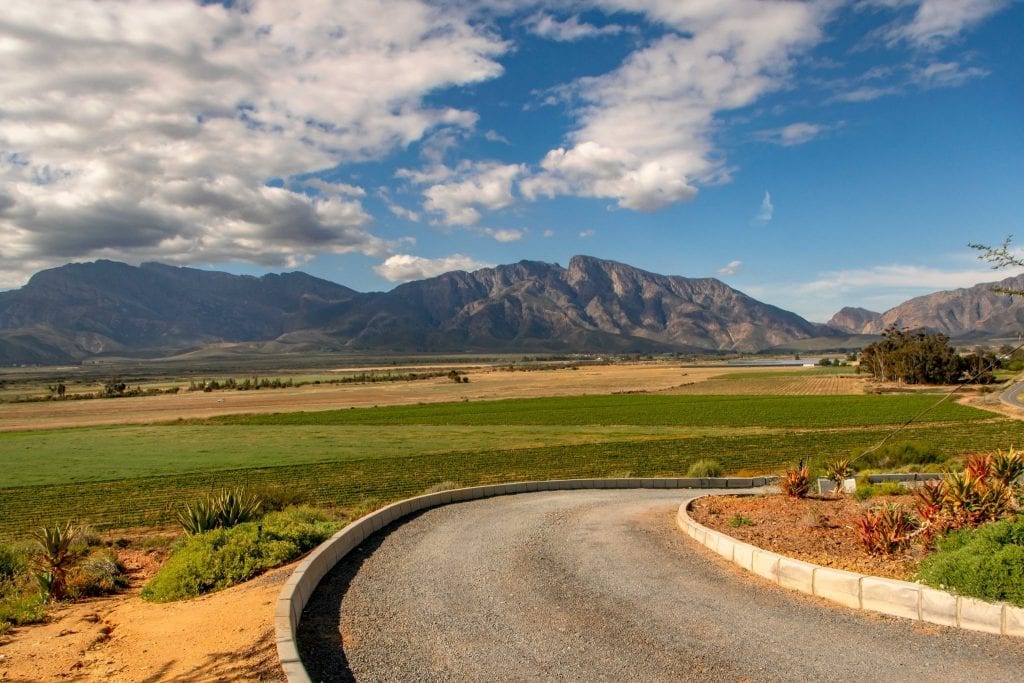
The rooms are lovely, the views delightful, the wine delicious, and there are plenty of other vineyards nearby for tastings as well.
Just make sure to give them 24 hours’ advance notice if you’d like to have dinner served! We booked at the last minute and unfortunately missed out.
Check prices & book your stay at Leipzig Country House & Winery!
Looking for something a bit different? These properties all get rave reviews as well:
- The Hazendal Hotel and Homestead (a luxurious spa in Stellenbosch)
- Van der Stel Manor (gorgeous property with included breakfast)
- Heins Manor House (relaxed farm stay in a historic building)

Stop #3: The Garden Route + Hermanus for 3 Days
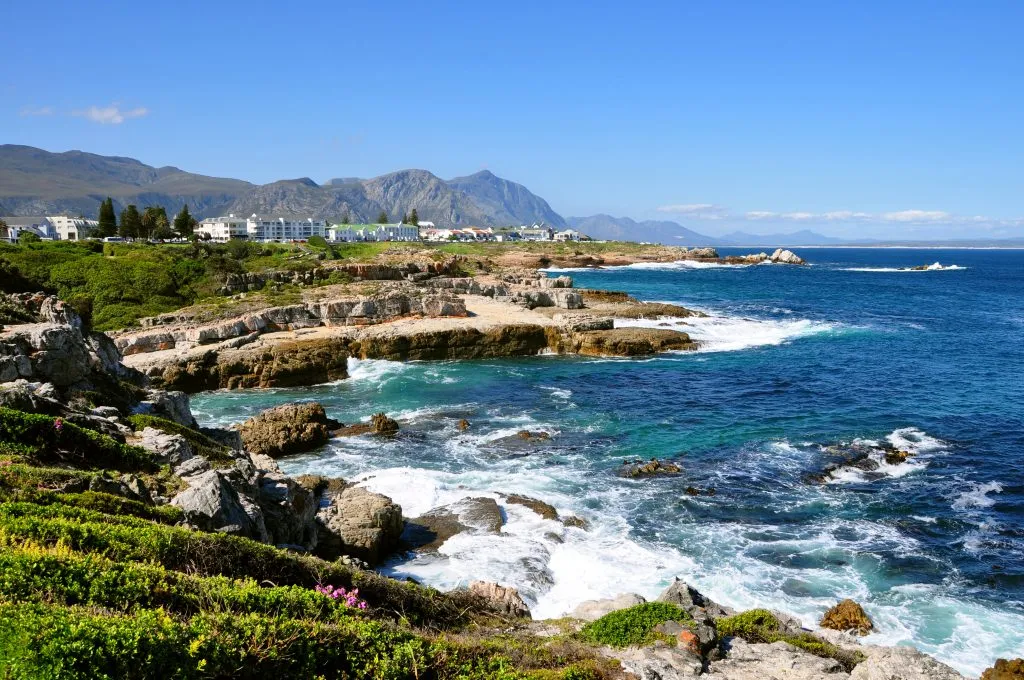
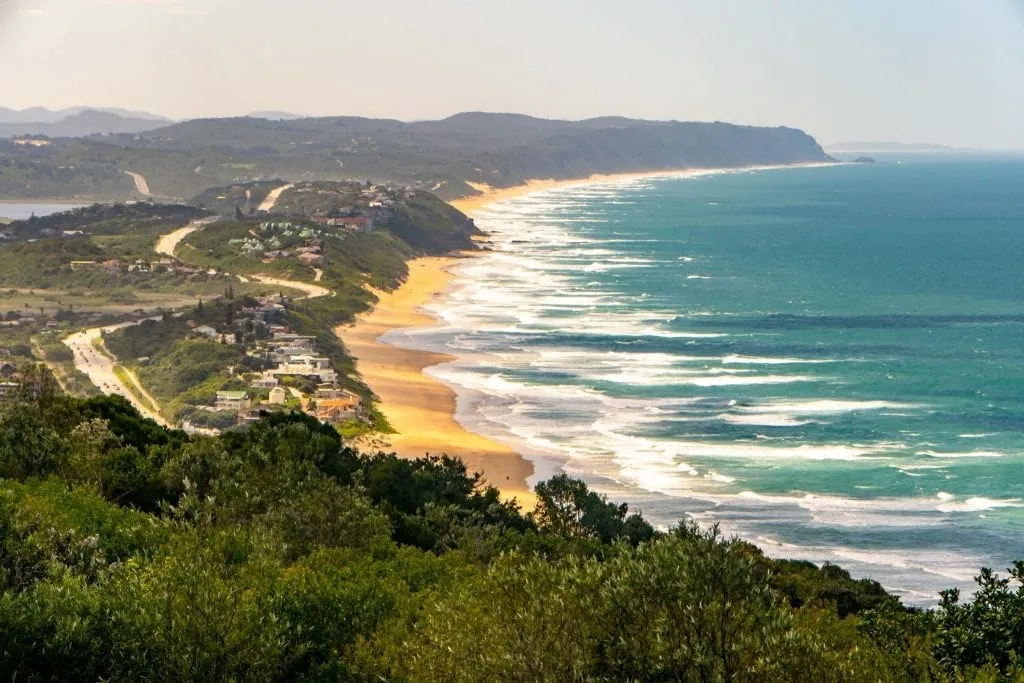
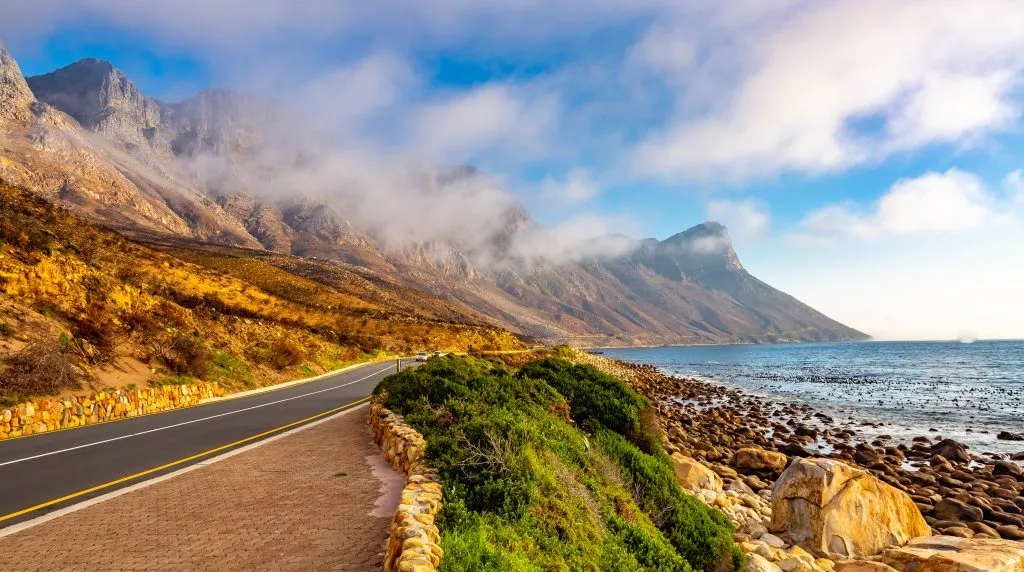
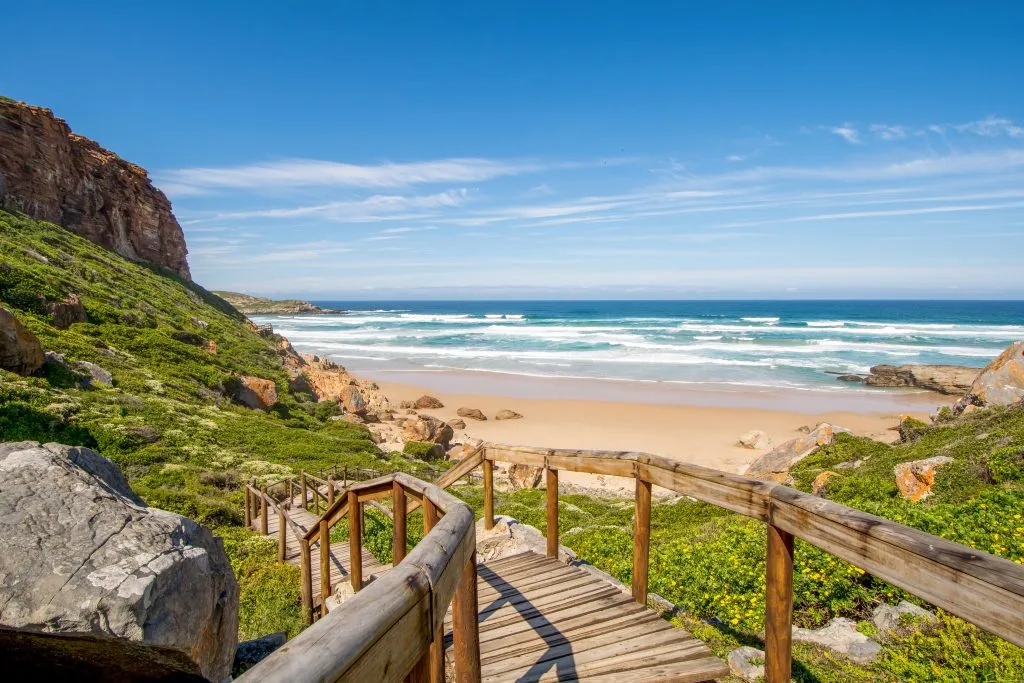
The Garden Route runs along South Africa’s southern coast from the town of Mossel Bay all the way to Eastern Cape, and is often ranked as one of the most beautiful roads in the world.
It is a fantastic addition to a 2 week South Africa itinerary!
Though it isn’t technically part of the Garden Route, I’m including the town of Hermanus in this section as well.
Hermanus is a popular and logical stop between Cape Town and the Garden Route, known for its beautiful coastline and its nearby Great White Shark population!
Top Things to Do on the Garden Route
Admire the beautiful nature views.
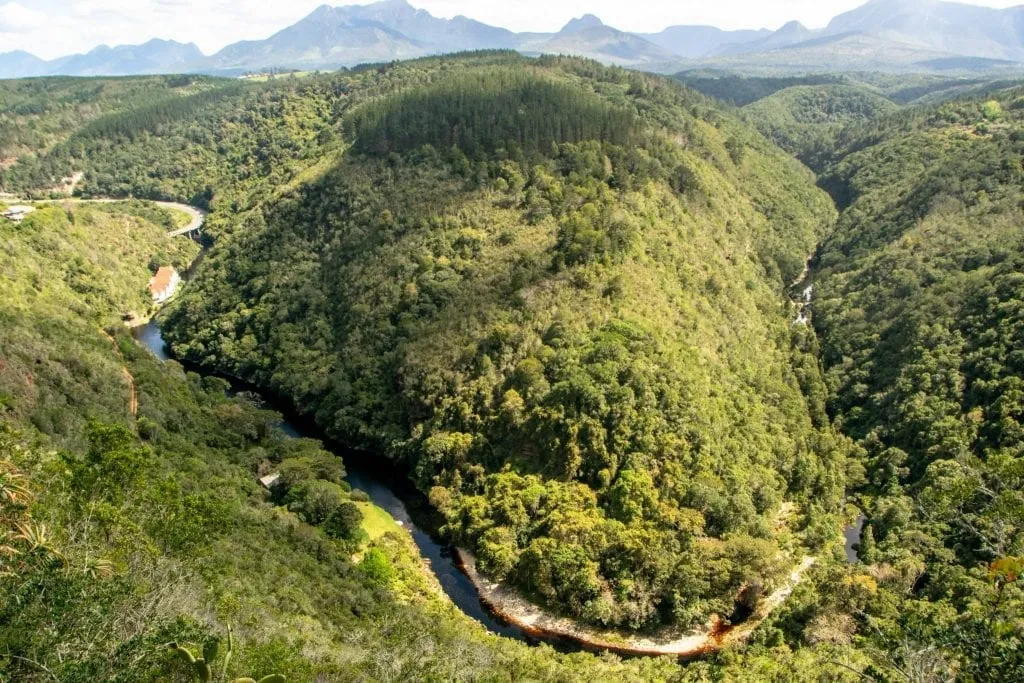
The Garden Route is ultimately about the views: the coastline, the forests, the gorges, the wildlife.
Whether you’re admiring it from your car, from the beach, or from a hike, be sure to enjoy the views during this part of your South Africa itinerary.
Swim with seals.
Talk about a wildlife encounter that you won’t forget anytime soon!
Seals are very playful, and we were so sorry to miss this fantastic experience due to the weather during our South Africa trip.
Hopefully, you can squeeze it into your 2 weeks in South Africa itinerary!
Enjoy some hiking.
The Garden Route is covered in amazing hikes that show off South Africa’s nature at its best.
Be sure to find a couple nearby wherever you decide to stop!
Seek out some adventure.
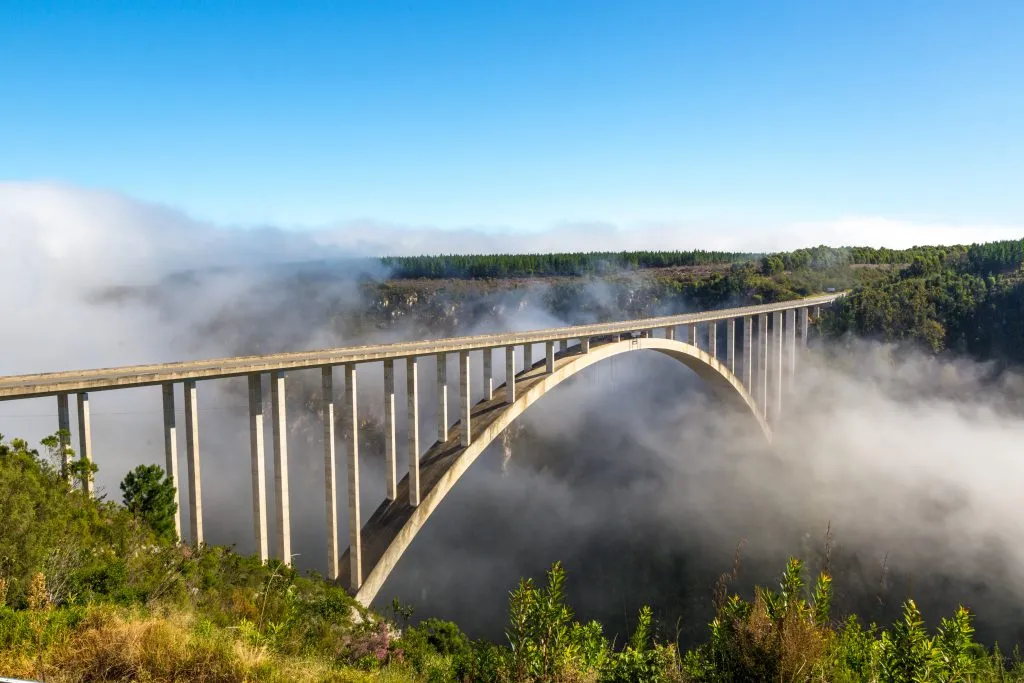
Does bungee jumping, paragliding, and/or cage diving with Great White Sharks sound like the adventure for you?
The Garden Route has you covered (but we highly suggest doing some research into the ethics of the whole shark diving thing).
Things to Consider on a Garden Route Road Trip
Familiarize yourself with the norms of driving in South Africa.
We’ll get into this in a lot more detail below, but to keep things short and sweet: check your insurance before renting a car in South Africa, stay vigilant about safety, and, of course, remember that South Africans drive on the left!
Sketch your stops ahead of time.
Do you want to stop in Hermanus, Wilderness, Knysna, Plettenberg Bay, or all of the above?
If you follow this 2 week South Africa itinerary, you should have about 3 days to spend along the Garden Route. Unless you are willing to cut time elsewhere, you won’t be able to cover it all.
We recommend picking a couple must-see spots or activities and building your Garden Route road trip from there.
Luckily, the driving distances aren’t long! Cape Town to Port Elizabeth in the Eastern Cape is only a little over 8 hours if you drive straight through.
That being said, time management will still be key to getting the most out of the Garden Route in 3 days.

Where to Stay Along the Garden Route
Similar to the Cape Winelands, the Garden Route spans an enormous geographic area, and what places and activities you choose to focus on will determine where you stay.
That being said, we had a fantastic experience at Sea La Vie, our property in Wilderness, and can highly recommend it!
An adorable boutique guesthouse located just a short walk from the center of Wilderness, Sea La Vie has a clear view of the beautiful beach.
Beyond the location, it has everything else you could want in a boutique property: a friendly manager, two dogs who live onsite, a delicious breakfast, and great decor. We would love to return one day!
Check rates & book your stay at Sea La Vie!
Looking for a different experience? Here are 3 more excellent options:
- Hamilton House (beach views and walkable to downtown Wilderness)
- Elephant Hide Guest Lodge (dreamy spa retreat in Knysna)
- The Old Rectory (pure luxury with an incredible pool in Plettenberg Bay)
Stop #4: 3 Days of Safari in Kruger National Park
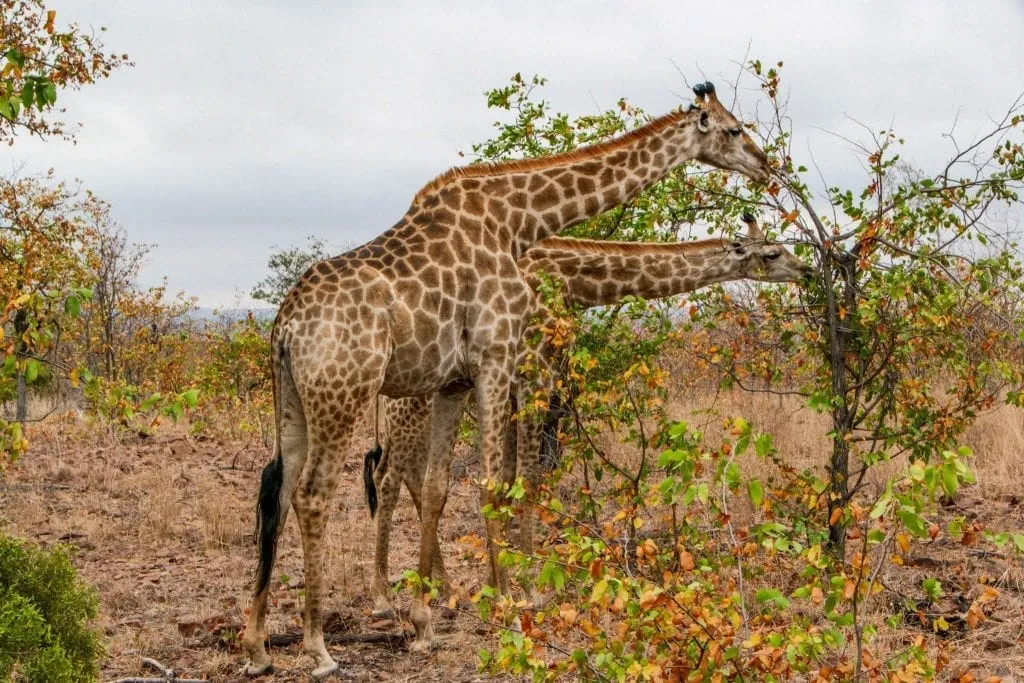
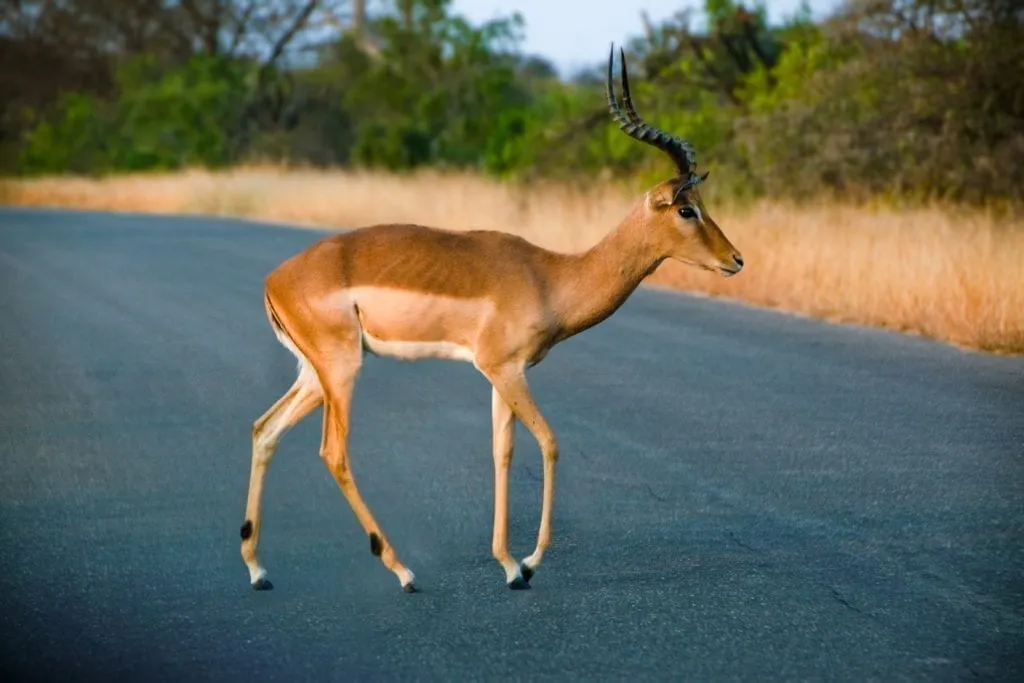
With its enormous size, impressive animal population (including plenty of big cats), and easy accessibility, it’s no surprise that Kruger National Park is one of the most popular places for a safari in the world!
Kruger National Park is a must-see stop on any 2 week South Africa itinerary, and even though it is geographically separated from the rest of these places to visit in South Africa, it is absolutely worth the effort required to reach it.
Our time spent on safari in Kruger National Park ranks among our most cherished travel memories of all time!
Top Things to Do in Kruger National Park
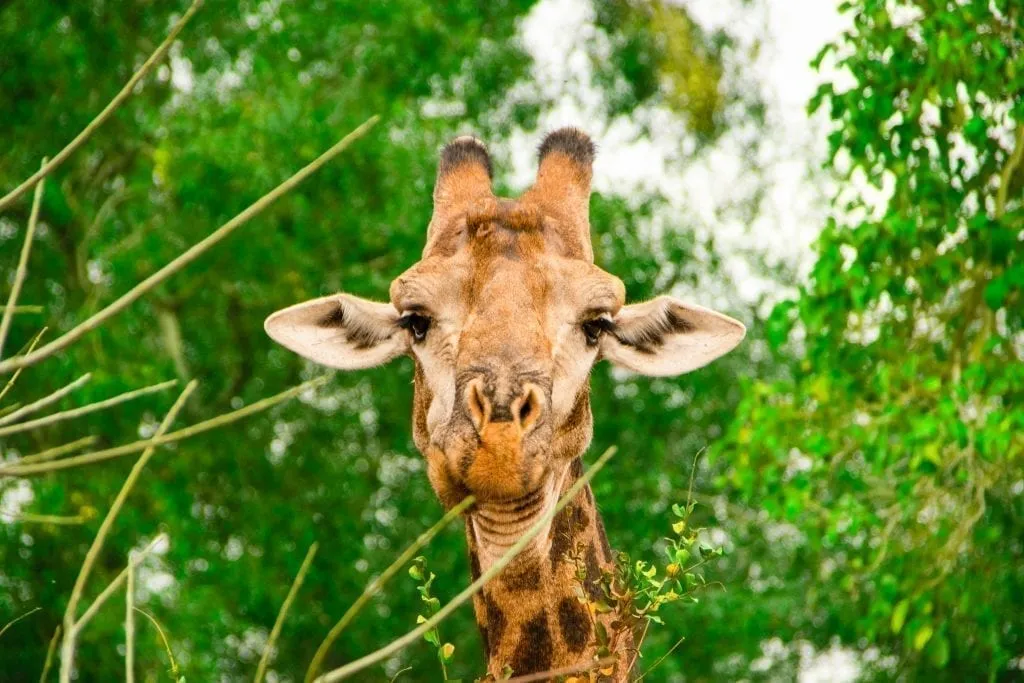
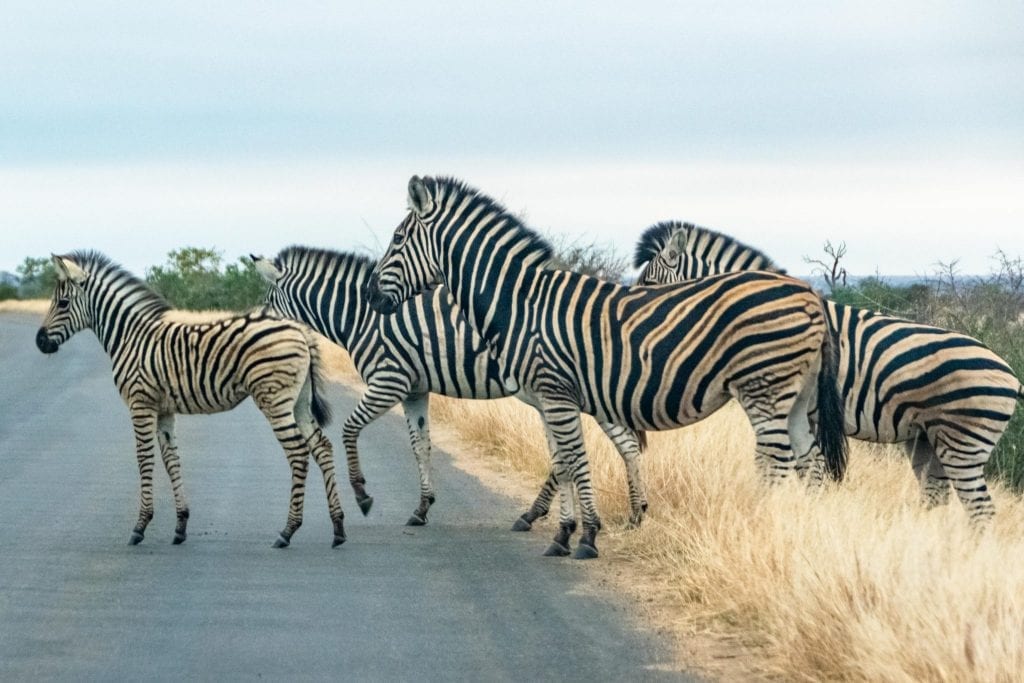
Stare in awe at all the animals.
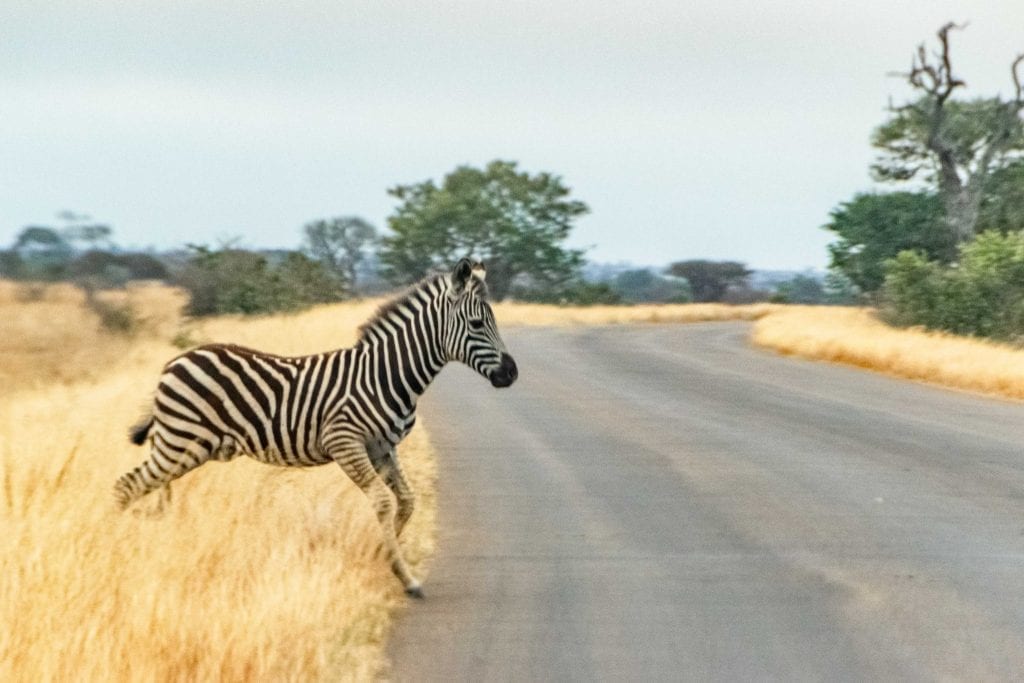
Really, a visit to Kruger National Park doesn’t require a long list of things to do: spotting incredible animals on a safari is what the park is all about!
True, you’ll need to decide whether to self-drive or not–we get into that a bit below–but ultimately, all your time in Kruger National Park will more or less be dedicated to admiring wild animals in their natural habitat.
Try to spot the Big Five.
Don’t know exactly which animals these are?
We didn’t either until we arrived.
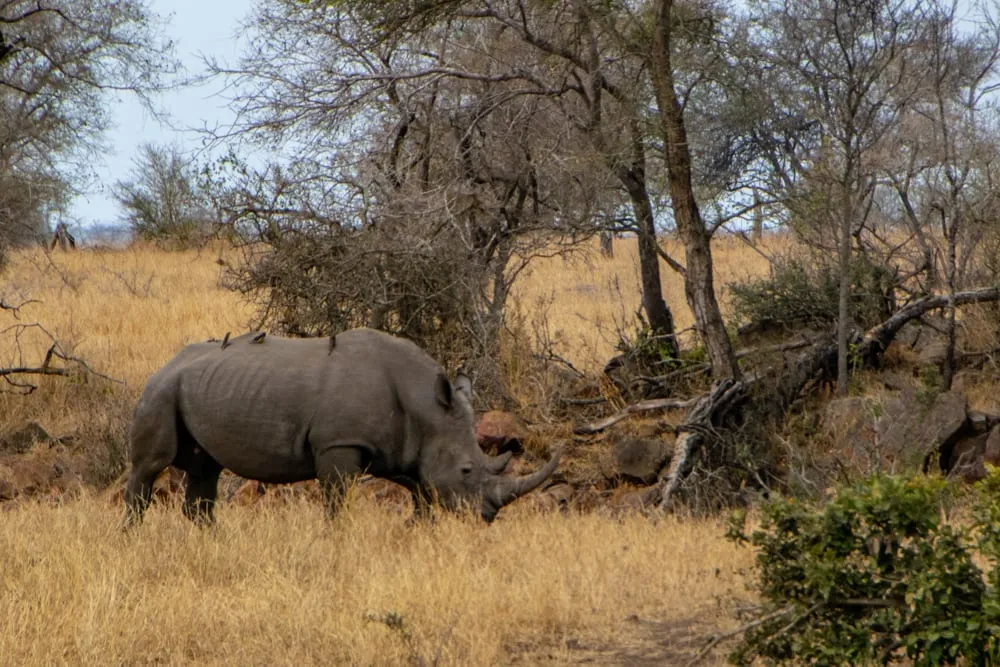
The Big Five are the lion, leopard, elephant, cape buffalo, and rhino (both white and black).
These animals are not known as the Big Five because of their beauty, elusiveness, or anything having to do with their status in the wild. They were named the Big Five for one simple reason: because hunters once considered them the five most dangerous animals to hunt on foot.
The nickname has stuck, but these guys are far from the only impressive animals to see in Kruger National Park.
Things to Consider in Kruger National Park
To self-drive or not: that is the major question.
In Kruger National Park, most visitors choose between self-driving (which is exactly what it sounds like), booking guided game drives like these), or a mix of both options.
Enterprising visitors can also take walking safaris, but they need to be booked well in advance!
The major benefit of booking a game drive is having a guide to help spot animals… and also having all the other guides working in the park helping spot animals.
The guides communicate via radio and will let each other know where something exciting has been spotted, which increases your odds of spotting more elusive animals.
It’s also, of course, more relaxing–no one has to drive!
Alternatively, self-driving is cheaper, more personal, and comes with tons of freedom.
We considered booking a game drive during our time in Kruger, but ultimately, we ended up having too much fun exploring alone to bother spending the extra money on an experience.
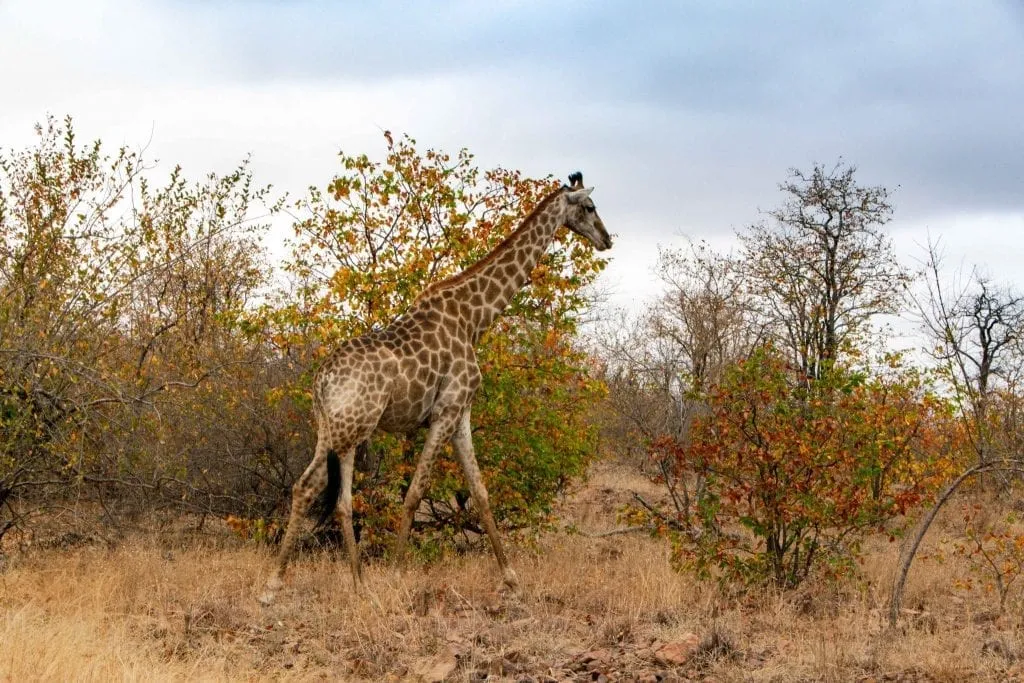
Animals were everywhere–we had no problem spotting them on our own–with only the elusive leopard evading us during our time in Kruger.
Frankly, we adored the freedom of driving around for hours at a time (roads were in great condition), and our self-driving game drives were one of the highlights of our time in South Africa.
If you do choose to self-drive, we recommend searching via Discover Cars to find the best rental company (with the best reviews) for your dates.
Shop rental cars for your Kruger National Park safari today!
Prefer to have a guide along? You can shop game drives in Kruger NP here!
Try to eat lunch at Lower Sabie Rest Camp one day.
Looking for insider tips for visiting Kruger National Park?
Be sure to eat lunch at Lower Sabie Rest Camp, which turned out to be one of our favorite experiences in South Africa.
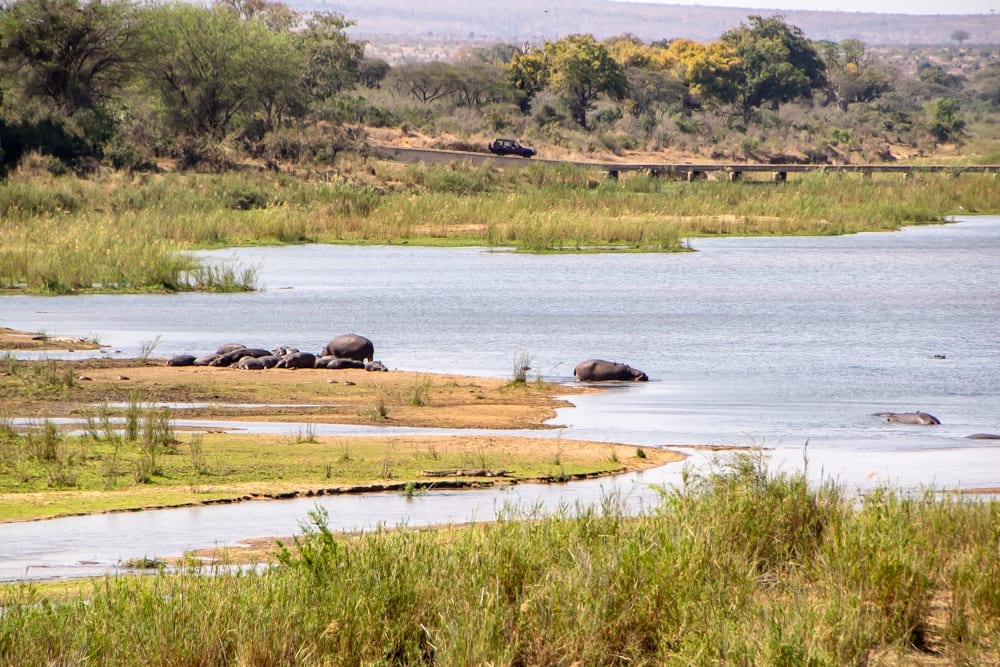
The restaurant here overlooks a major watering hole, and we couldn’t believe the views during lunchtime!
Between arriving at the restaurant a bit before midday and leaving an hour or so later, we spotted dozens of animals making their way to the location.
Lounging hippos, a prowling hyena, a family of elephants, tons of giraffes, plenty of water buffalo, and more all showed up to delight us as we ate lunch.
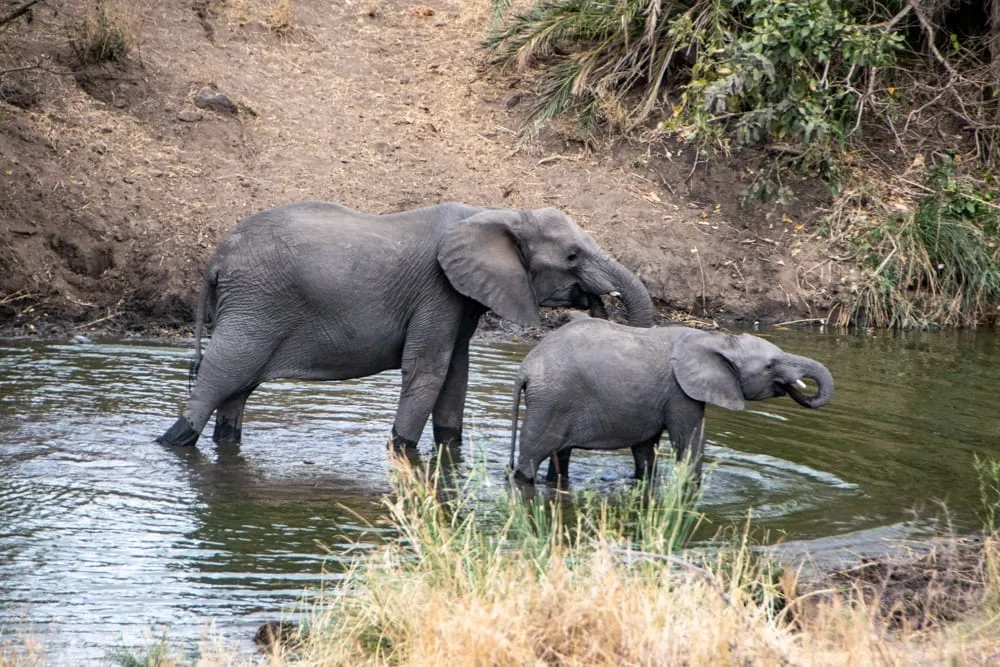
For the love of elephants and sanity, don’t get out of the car!
This should seriously go without saying, right?
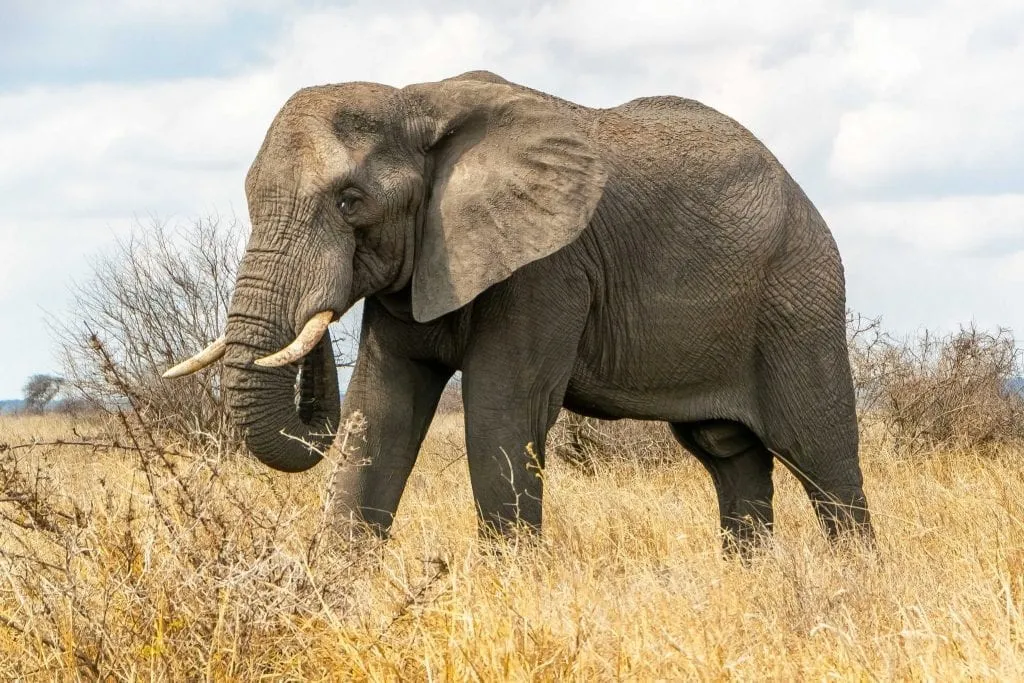
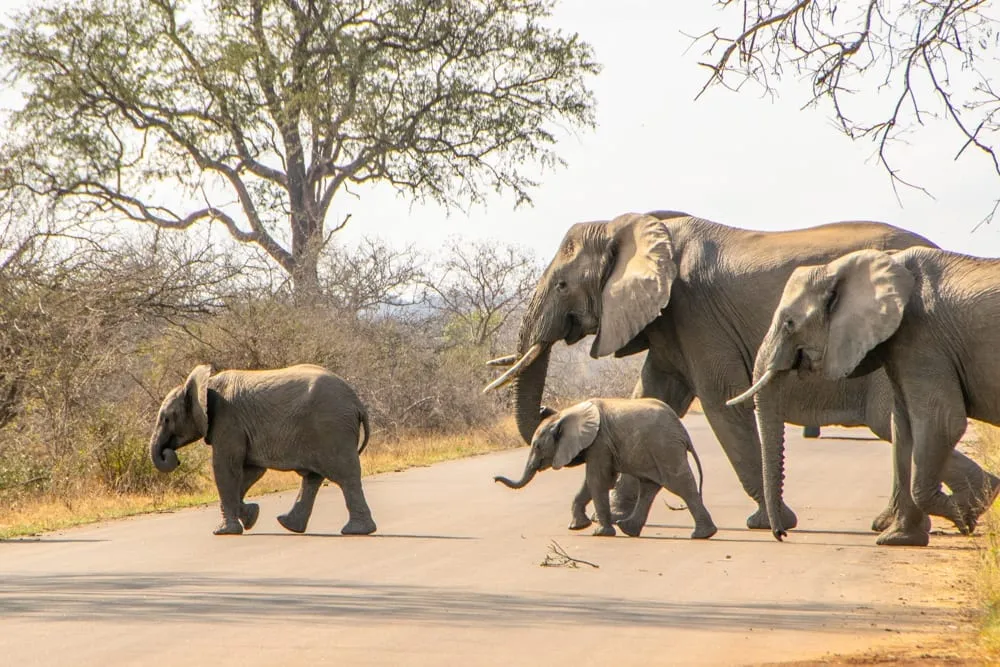
But alas: despite dozens of signs and instructions stating to stay in the car, we still saw multiple people get out of their cars in the presence of wild animals while in Kruger–a couple of them even walking toward elephants that had babies with them!
Stupid. Dumb. Reckless.
Don’t do this.
If there’s only one safari tip you follow, make it this one: for the sake of both you and the wildlife, stay in your car.
You probably don’t need a four-wheel-drive vehicle.
This is a common question, and it’s bound to come up when you’re planning a trip to South Africa.
A four-wheel-drive vehicle is unnecessary for Kruger, especially if you’re planning on sticking to the more-traveled southern half of the park (most people do: Kruger National Park is roughly the same size as Slovenia or Wales).
We got by just fine in the tiniest, most compact car the rental company had on hand, and our fuel bill thanked us for it!
Where to Stay in Kruger National Park
Choosing where to stay in Kruger National Park essentially comes down to one question: would you rather stay on a private game reserve off-site, or within the park itself at one of the rest camps?
Private reserves can offer more luxury but also require driving into the park for each game drive, which can eat up lots of time that could be better spent admiring animals.
Personally, unless you’re after a true luxury experience, we recommend staying within the park itself.
You’ll be a lot closer to the action, and these aren’t campsites like you would think of on hiking trips!
Having both cabins and restaurants on-site is the norm for Kruger’s most popular rest camps, though there are some smaller ones where you need to self-cater.

You can book campsites here, and be sure to do so as soon as you’re sure of your dates–they fill up fast!
We stayed at Satara and enjoyed it, though we would have slightly preferred staying at Lower Sabie had we been able to get in (they were fully booked when we booked a month in advance).
If you’re looking for something away from the crowds, Olifants is beautiful and further north than the other two I mentioned.
Alternatively, if you’re self-driving throughout your time in Kruger, you could book one night each at several successive camps and slowly make your way through the park without needing to double-back.
This method will be our first choice when we make it back to Kruger National Park!
If you think an off-site game reserve is more your style, these 3 places all get excellent reviews (and as you can see, the prices and inclusions are truly all over the map):
- MILIMA Big 5 Safari Lodge (luxurious all-inclusive with included game drives)
- Little Bush Private Lodge (lagoon-style pool, beautiful chalets, good prices)
- Crocodile Kruger Safari Lodge (river views, pool, and optional airport transfer)
More Than 2 Weeks in South Africa?
Two weeks in South Africa isn’t nearly enough to cover the entire country–which is perfectly fine because it makes it easy to justify coming back to cross more spots off your South Africa bucket list!
If you have more than 2 weeks in South Africa, consider adding on time in the coastal city of Durban (there are lots of fun things to do in Durban), visiting the Addo Elephant Park, road tripping the Wild Coast (the less-stylized cousin of the Garden Route), exploring Johannesburg, and checking out the stunning Drakensberg Mountains... just to name a few options!
For luxury seekers, out-of-this-world safari lodging like at Kapama River Lodge or a ride on the decadent Blue Train might call your name.
You could also easily spend far more time in Cape Town–we based ourselves there for a month and never got bored–or extend your trip into the small countries almost or entirely enveloped by South Africa, Lesotho and Eswatini.
Getting Around South Africa (+ Driving Tips!)
More than any other country we have visited, South Africa reminds us of our homeland of the USA, and a major reason for that is the car culture.
South Africa is a large country that is not densely populated, and the result is that it is–for better or worse–a fantastic country for a road trip.
You won’t necessarily need a car to check out the best things to do in Johannesburg or Cape Town, or even in Kruger National Park if you choose to exclusively explore via organized game drives, but to complete the Garden Route and see the Cape Winelands, renting a car is practically a must.

If you absolutely do not want to drive during your 2 weeks in South Africa, backpackers can consider the Baz Bus that travels throughout South Africa’s main tourist highlights (it has mixed reviews and a difficult-to-manage schedule, but it is an option).
Less budget-focused travelers might consider booking organized tours (like this extremely popular day trip from Cape Town, for example) to take them out to various highlights.
Coming from the USA and having rented cars in more countries than we can count (including Mexico, Croatia, and Costa Rica, to name a few), we found driving in South Africa perfectly fine.
The roads were primarily in very good condition, the traffic organized and reasonable, and once we got used to the whole driving on the left thing, we found road tripping in South Africa to be a positive experience.
Here are a few essential tips for enjoying your South Africa road trip:
Tips for Driving in South Africa
South Africans drive on the left.
Simple, I know, but definitely a change to be aware of for those of us used to driving on the right!
Not all rentals come with unlimited kilometers.
If yours doesn’t, be sure to add up the approximate number of kilometers you plan to drive and add any extra charges to your rental car budget.
We found the costs very reasonable, but it’s best to be aware of what you are getting into.
Use Discover Cars to find the prices, reviews, and requirements of several companies at once–both local and international.
Rental insurance is a must.
We found driving in South Africa to be a very comfortable experience, but it is a country with quite a bit of car-related crime (we’ll get to that in a second) and, for many of us, unfamiliar driving practices.
Be sure to insure the vehicle you rent, and make sure you’re aware of any excess/deductible you will be responsible for in the event of an issue.
If you plan to use your own policy rather than one through the rental company, double-check that they will cover driving in South Africa specifically.
Carjackings are a problem in South Africa.
This sentence sounds scarier than it is, truly–we never once felt unsafe driving in South Africa–but for this reason, it is recommended to stick to well-traveled, touristic paths and to avoid driving at night.
… And neither are thefts and smash-and-grabs.
Suffice it to say, it’s best to fly under the radar while driving during your 2 weeks in South Africa.
Never leave valuables (or, as numerous signs will warn you, anything) visible inside your car when you park it, stick to well-lit, watched locations, and again: buy insurance.
Tip the car watchers.
Due to the issues with car crime outlined above, South Africa has developed a cultural practice of “car watchers”.
These are people–usually men, often ones that are fairly down on their luck–who hang around parking spaces to informally guard the cars that are parked there in exchange for tips.
As this is common and expected in South Africa, it’s considered reasonable to go along with it and tip 5-10 rand each time you park.

Gas stations are not self-service.
When you pull up to the pump, an attendant will approach you and ask “how much”.
Usually, one person will then pump the gas while the other cleans the windshield and windows.
It’s best to tip a few rand here, as well.
It’s possible to drive rental cars outside of South Africa, but you need to disclose your plans.
Hoping to expand your 2 week South Africa itinerary and take a side trip into Namibia, Mozambique, Lesotho, Eswatini, or beyond?
It’s possible–but you’ll need to disclose it to the rental car company to acquire the proper paperwork to cross the border, and that usually comes with a fee.
Certain countries are easier to access than others, as well.
It’s fairly standard to drive a South African car into Namibia, for example, but most rental car agencies will not allow you to drive into Mozambique (and those that do expect you to pay handsomely for the privilege).
Flying in South Africa
Domestic flights in South Africa are fairly cheap, and we recommend considering taking advantage of at least one or two of them during your 2 weeks in South Africa, especially when flying to and from Kruger National Park (Nelspruit is the airport right next to the park, Johannesburg is within a day’s drive from Kruger).
South African Airlines is South Africa’s best-known airline, but budget options like SA Airlink and FlySafair are also popular.
During our trip to South Africa, we flew with both South African Airlines and an airline called Mango that has since gone out of business, and had no complaints about either.
Safety in South Africa
When discussing traveling in South Africa, discussing safety is inevitable.
In certain areas, South Africa has developed a reputation as a dangerous country.
In some ways, this is outdated advice that applied more to the tumultuous 1990s than current times, but in other ways, it’s still very apparent.
Like in some places in Latin America, security is a major and obvious concern in South Africa.
Barbed wire lining the top of concrete walls blocking out private homes, signs warning against leaving valuables in your car, and advice about avoiding driving at night are all prevalent.
As discussed above, carjackings and petty theft are both concerns in South Africa, and they shouldn’t be taken lightly.
Now–all that said–the safety situation on the ground in South Africa for tourists is far less dire than one might think.
This 2 week South Africa itinerary follows popular tourist routes that thousands of people take every year, South Africans, in general, are open and friendly people, and we personally see absolutely no reason to stay away due to current safety concerns.
As of the time of updating this blog post, the US Travel Advisory has South Africa’s travel risk ranked as “Level 2: Exercise increased caution.”
Like in most places in the world, the areas of South Africa that are most stricken by crime are not the ones that tourists tend to flock to.
We never once felt threatened while in South Africa, and usually felt extremely comfortable. We did take more safety precautions while traveling, especially when we had a rental car, than we would in Italy or France. We treated our safety with the same vigilance that we would in, say, Colombia or Cambodia.
Our advice regarding staying safe in South Africa is to be vigilant, and to research up-to-date information on specific destinations before you arrive–but to try not to overthink it too much, either.
There’s a good chance that you’ll be pleasantly surprised by how safe you feel during your 2 weeks in South Africa!
The Best Time to Visit South Africa
There’s no such thing as a bad time to visit… but the best time to visit South Africa depends on what you’re looking for.
Summer in Cape Town (November to February) is perfect for those looking for warm beach escapes, while hikers may want to consider spring or fall for cooler weather.
On the other hand, July to November (AKA winter) is the best time to visit if you’re hoping to spot whales during your 2 weeks in South Africa.
In Kruger National Park, the summer (wet) season makes for prettier landscapes in photos, but the winter (dry) season brings easier animal sightings.
If you have a wide variety of choices regarding when you experience this itinerary for 2 weeks in South Africa, we recommend structuring it around the best time to do your most sought-after activity, whether that’s surfing, safari, hiking, or something else, and letting the rest of the pieces fall into place from there.
Of course, if you’re coming from the northern hemisphere like us, be sure to remember that the seasons are flipped in South Africa!
What to Pack for 2 Weeks in South Africa
We definitely made some mistakes on our own South Africa packing list!
After traveling to South Africa, we published this curated South Africa packing list that improves on our errors, but to get you started, here are a few things you’ll definitely want to bring:
Travel Insurance — Definitely be sure not to visit South Africa without travel insurance!
We don’t ever suggest traveling without insurance–anything can happen on the road, and traveling to a place heavy on adventure activities like South Africa is definitely a case of better safe than sorry.
Be sure to read the contract carefully and check the exact inclusions, especially if your dream South Africa vacation includes some adventure sports! You can check prices and inclusions for insuring your trip to South Africa here.

Travel Adapters for South Africa — There’s nothing more annoying than arriving in a destination and finding that you can’t charge any of your electronics! They’re absolutely one of the top South Africa packing essentials.
Apple Air Tags — Air Tags are a relatively new addition to our packing lists, but we’ve loved having the extra security when checking our luggage!
They’ll be coming with us from now on.
Cell Phone eSIM or SIM Card — These days, cell phone data while abroad (especially if you’re taking a South Africa road trip) can be considered a must!
Consider buying an eSIM before you leave, or purchasing an international plan for your cell phone (most carriers offer them, but they tend to be more expensive than eSIMs). If you have an unlocked phone, you can also just buy a local SIM card once you land.
Lately, we buy an eSIM from Airalo before each trip, and marvel at how much easier using our phones abroad has gotten since we first started traveling!

Pacsafe Portable Safe — We love our Pacsafe! This safe makes it incredibly easy to keep valuables safe abroad, and we used it throughout South Africa.
Our large Pacsafe easily holds our valuables, and when leaving hotel rooms, we simply loop it around the strongest thing in the room (usually a pipe or the base of a toilet) and know our belongings are secure.
Pacsafes are affordable and easy to pack, and a very practical item for your packing list for South Africa!
Sunscreen
Binoculars
Bug Spray
Don’t forget to put some on your packing list for South Africa!
Sea Bands

Come prepared and put a pair of Sea Bands (I swear by these, they’re amazing) and some Non-Drowsy Dramamine!


Just a friendly note: you mention the ‘water buffalo’ as one of the big five animals. It is in fact the Cape Buffalo. Water buffalo are domesticated animals seen mostly in Asia.
Thanks Leon!
Fantastic post – thank you so much. My husband and I, along with another couple, leave for 2 1/2 weeks (our first trip to South Africa) in April 2025. You’ve given us so much helpful info, and your photos are wonderful! Thank you.
Karen
That’s great to hear, thank you Karen! I hope you guys have a fantastic time in South Africa. 🙂
I have lived in SA all my life and must say, your comments about things to see in South Africa are spot-on! Thanks for the wonderful photos. Pity you missed the amazing Drakensberg mountains. With the current exchange rate, you probably found South Africa one of the cheapest countries in the world as well. Next time you are here, let me know. I will offer you free accommodation and show you around.
Just came across this post. Extremely well-written, helpful, and informative. Will definitely be checking out your other articles. Happy travels!
Thanks so much, Ryan! Hope you love your trip to South Africa as much as we loved ours. 🙂
Thank you so much for the advice. After being on my bucket list for over 30 year’s I am finally going to SA next year for my 50th SOOOO excited. I’m just trying to get my head around itinerary and transport as we are hoping to go to watch British lions match in Johannesburg and also do a few days voluntary work at the AMAZING Goedgedacht Trust Farm. I was a bit fearful of self drive but having read your post I think we could possibly brave hiring a car. Thanks again for the inspiration and top tips.
Congratulations on such a bucket-list trip!! I hope that it’s everything you’ve dreamed of. South Africa is absolutely stunning, and I don’t think you’ll regret hiring the car in the slightest! Some of my favorite travel memories of all time are from self-driving Kruger. 🙂 Good luck!
Fingers crossed for 2021, August through October. Planning to begin in Johannesburg for 2 weeks; Kruger NP and Panorama Route for 2 weeks; Durban/Drakensberg/Sani Pass for 2 weeks; Port Elizabeth for 1 week; Mossel Bay and Garden Route for 1 week; Cape Town and Winelands for 1 month.
Flying into JNB, Nelspruit, Durban, then considering Baz Bus for Durban to Cape Town. Rental car for Kruger and Panorama Route only.
I am so excited and ready for this experience!!!!!
My fingers are crossed for you too! August-October was the exact timeframe of our trip a couple of years ago, and we absolutely adored it. Hope you have an amazing trip! 🙂
Ahhh… my lovely, beautiful country! The most beautiful country in the world. All people should have it on the top of their bucket list!
You have an absolutely beautiful home! We’d love to return one of these days.
Love how detailed the post is.Please, let us know in which month you have visited? We are considering end of may 2020 and we would like to follow your itinerary. Adding in the bungee jumping and paragliding in garden route as well.
We were in South Africa from August-October, with a side trip into Mozambique at the beginning of September. We drove the Garden Route in mid-October!
Hi Kate, first of all thank you for a wonderfully detailed but easy to follow itinerary for two weeks in South Africa, and for your advice on things to see and do. I’m thinking about visiting SA in December 2019 (14-28th) alone…do you think it is a place suited to solo travelers? My concern is more around the safety side of it as I hear not to go out at night, don’t go hiking alone etc. I have travelled to many places in the world alone, at been out at night without issue. I’m also quite flexible because i’m travelling alone, I was thinking one week CT followed by a drive along the Garden route and stopping at some of your suggested places. I would plan to fly in/out of Cape Town but could possibly do Jo Burg. Your advice would be appreciated. Thanks, Matt
Hi Matt!
Obviously we’re not solo travelers, so can’t offer much personal advice in that regard, but I will say I know several people who have taken solo trips to South Africa and loved it. I think it can be a wonderful solo travel destination. CT/the Garden Route are very well-traveled and you’ll almost certainly meet other solo travelers there.
I’d recommend being more cautious than in your average European city or backpacker haunt in SEA, and strongly consider going on a tour if you want to hike at sunset or later, but I definitely don’t think you should stay home! I’d treat it much like any other trip, but err on the side of caution and joining a group for anything particularly out of the way or at night.
Hope that helps and that you have a fabulous trip!
Hello. Thanks for the thoroughly explained itinerary. Question: is it possible to follow your schedule if flying in/out of Johannesburg or do you recommend flying into one and out off the other so that one can rent a car and drop it off at the end of the trip?
Either way is absolutely fine! There are plenty of inexpensive budget flights in between Cape Town and Johannesburg, so you can easily do it either way–just depends on your flight plan and how much you care to drive.
South Africa has been on the top of my list for way too long. Hoping to finally get there in 2019. Thanks for sharing.
Thanks, Eden! Fingers crossed that 2019 is the year it works out for you.
Gahhh this post has me wanting to go so badly! Maybe it’ll be my 30th birthday gift to myself ;D
Yes! I like that plan. South Africa is right up your alley. 😀